1️⃣ Introduction
CICADA COVID Variant – Just when the world thought COVID-19 was fading into the background, a new name is quietly surfacing — CICADA variant.
At first glance, it may seem like just another mutation. But here’s the problem:
many people are ignoring early symptoms, assuming it’s “just a mild infection.”
That mistake could cost more than a few sick days.
Health experts warn that new variants often behave unpredictably, and delayed response is one of the biggest reasons people develop complications. If ignored, this variant could silently impact lungs, heart health, and long-term immunity.
2️⃣ What Is CICADA COVID Variant?
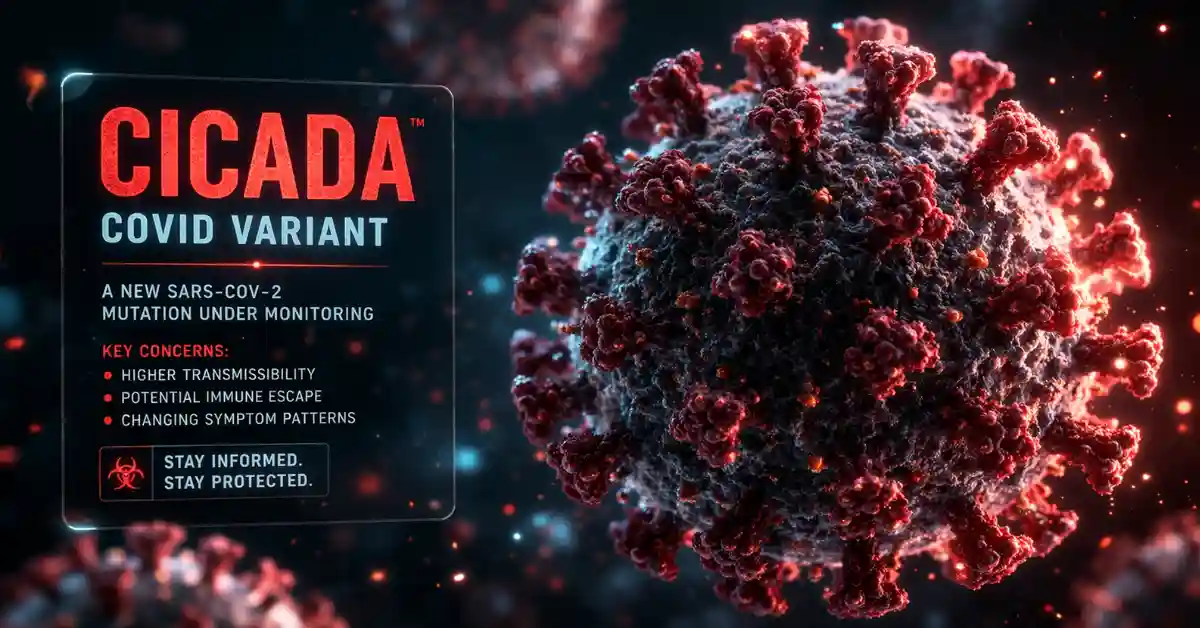
The CICADA COVID variant refers to a newly identified mutation of the SARS-CoV-2 virus, currently being monitored for:
- Increased transmissibility
- Immune escape potential
- Changes in symptom patterns
According to the World Health Organization (WHO), variants emerge due to genetic mutations during viral replication. Some variants become Variants of Interest (VOI) or Variants of Concern (VOC) if they show increased risk.
👉 In simple terms:
CICADA is not a completely new virus — it’s an evolved version of COVID-19 that may behave differently.
3️⃣ What Happens If You Ignore It?
Here’s the uncomfortable truth:
Ignoring new variants is exactly how previous waves escalated.
🚨 Potential Risks:
- Increased infection spread in communities
- Reinfection even in vaccinated individuals
- Higher risk for elderly & comorbid patients
🫁 Long-Term Complications:
Research from NIH and PubMed shows post-COVID effects can include:
- Chronic fatigue syndrome
- Reduced lung capacity
- Cardiovascular inflammation
- Brain fog (cognitive decline)
📊 A 2023–2025 analysis (NIH) found:
Up to 30% of COVID patients develop long COVID symptoms.
👉 If CICADA behaves similarly or worse, ignoring it could lead to:
- Reduced work capacity
- Long-term physiotherapy needs
- Persistent breathing dysfunction
4️⃣ Causes & Risk Factors
🧬 Viral Factors:
- Mutation in spike protein
- Immune evasion capability
👤 Individual Risk Factors:
- Weak immunity
- Diabetes, hypertension
- Obesity
- Chronic lung disease
👴 Age-Related:
- Elderly (>60 years) at higher risk
- Children may act as silent carriers
🏥 Occupational Risks:
- Healthcare workers
- Public-facing jobs
- Crowded urban environments
5️⃣ ⚠️ Warning Signs & Symptoms
🔹 Early Symptoms (Don’t Ignore):
- Mild fever
- Sore throat
- Fatigue
- Dry cough
- Headache
🔴 Advanced Symptoms:
- Shortness of breath
- Chest tightness
- Persistent high fever
- Oxygen drop (<94%)
👉 Red Flag:
If symptoms worsen after 3–5 days, seek medical help immediately.
6️⃣ Diagnosis & Clinical Standards
Diagnosis remains similar to previous COVID variants:
🧪 Tests:
- RT-PCR (Gold Standard)
- Rapid Antigen Test
- CT Scan (for lung involvement)
📋 Guidelines:
- WHO recommends testing + symptom monitoring
- CDC suggests isolation protocols for confirmed cases
👉 Early diagnosis = better recovery outcomes.
7️⃣ 💪 Strong Solution Section (Evidence-Based)
Here’s the good news:
We already know what works — if applied early.
🏥 Medical Treatment:
- Antiviral medications (if prescribed)
- Symptomatic treatment (fever, cough)
- Oxygen support (severe cases)
🧘 Physiotherapy Role:
- Breathing exercises (diaphragmatic breathing)
- Lung expansion techniques
- Post-COVID rehabilitation
📚 Studies in Physiotherapy journals confirm:
Respiratory physiotherapy improves:
- Oxygen capacity
- Recovery time
- Functional independence
🥗 Lifestyle Support:
- High-protein diet
- Hydration
- Vitamin D & Zinc (as advised)
❌ Myths vs Reality:
- ❌ “It’s mild, ignore it”
- ✅ Early care prevents complications
8️⃣ 🛡️ Prevention & Daily Habits (WHO-Aligned)
✅ Proven Protection Steps:
- Wear masks in crowded areas
- Hand hygiene
- Stay updated with vaccines
- Improve immunity (sleep + nutrition)
🧠 Smart Habits:
- Avoid panic, follow science
- Monitor symptoms daily
- Isolate early if symptomatic
👉 Prevention is still the most powerful tool.
Disclaimer: This content is for educational purposes only and does not replace professional medical advice, diagnosis, or treatment. Always consult a qualified healthcare provider for any medical concerns or symptoms.
FAQs
1. Is CICADA COVID variant more dangerous?
Not fully confirmed yet, but early signs suggest possible increased spread and immune escape.
2. Can vaccinated people get infected?
Yes, but vaccines still reduce severity and hospitalization risk.
3. Is it reversible?
Most cases recover, but long COVID symptoms can persist in some individuals.
4. How long does recovery take?
- Mild: 7–10 days
- Moderate: 2–3 weeks
- Long COVID: months
5. Can physiotherapy help?
Yes — especially for lung recovery and fatigue management.
6. What mistakes delay recovery?
- Ignoring symptoms
- Late testing
- No rest
- Self-medication
7. Should I panic?
No — awareness + early action = safety.
References (APA Style)
- World Health Organization. (2024). Tracking SARS-CoV-2 variants. https://www.who.int
- National Institutes of Health (NIH). (2023). Post-Acute Sequelae of COVID-19. https://www.nih.gov
- CDC. (2024). COVID-19 Variant Monitoring. https://www.cdc.gov
- Nalbandian, A., et al. (2021). Post-acute COVID-19 syndrome. Nature Medicine. https://doi.org/10.1038/s41591-021-01283-z
- PubMed Study: Carfì, A., et al. (2020). Persistent symptoms after COVID-19. JAMA. https://pubmed.ncbi.nlm.nih.gov/32644129/
- Physiotherapy Evidence Database (PEDro). (2022). Respiratory rehabilitation in COVID-19 patients

Dr. Shabbir Hussain, BPT
Licensed Physiotherapist | Clinical Rehabilitation Specialist
Maharashtra OTPT Council Reg. No.: PR-2021/08/PT/009532
Society of Onco Physiotherapists Reg. No.: SOP/00033/LM
Dr. Shabbir Hussain, BPT, Registered Physiotherapist with over 8 years of experience in physiotherapy, kidney rehabilitation, oncological rehabilitation, and lymphedema management. He specializes in balance disorders, pain management, musculoskeletal rehabilitation, strengthening programs, and VR-based rehabilitation.