
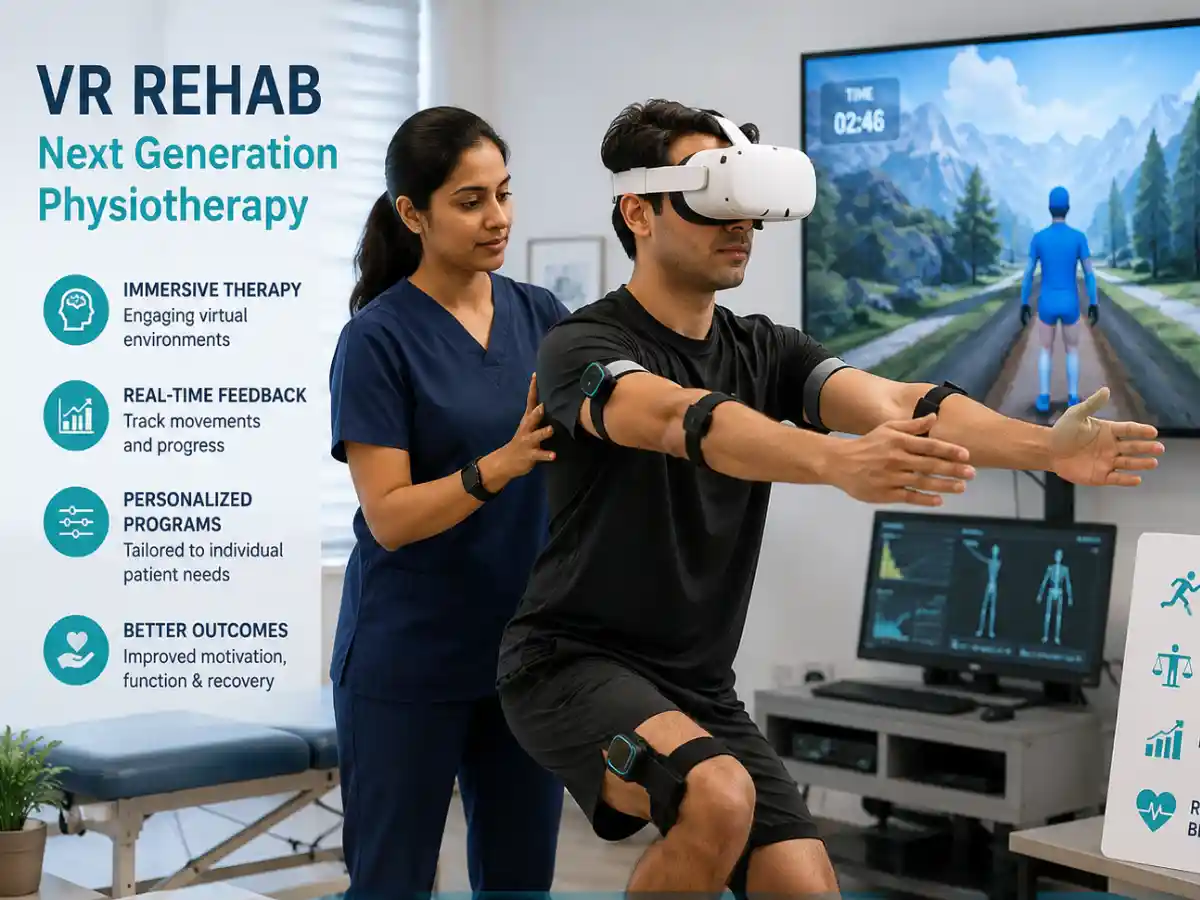
Revolutionize Your Physiotherapy with VR Rehab
Imagine a stroke patient taking their first confident steps again—not inside a hospital corridor, but inside a virtual world. Virtual Reality (VR) rehabilitation is changing how physiotherapy is delivered, making recovery more engaging, measurable, and motivating.
In my clinical practice, I have observed that patients become more engaged when rehabilitation feels interactive rather than repetitive. Although VR is not suitable for every patient, it can significantly improve motivation and adherence in selected neurological and orthopedic cases.

The use of VR rehab in physiotherapy is providing patients with immersive and engaging experiences, enhancing their rehabilitation journey. By leveraging virtual reality technology, physiotherapists can create personalized therapy plans that cater to the specific needs of each patient.
📌 At a Glance
- ✅ VR rehabilitation complements traditional physiotherapy—it is not a replacement for evidence-based treatment.
- ✅ Strongest clinical evidence currently supports its use in stroke rehabilitation, Parkinson’s disease, balance disorders, and neurological recovery.
- ✅ Interactive virtual exercises can improve patient motivation, therapy adherence, and participation during rehabilitation.
- ✅ Real-time feedback and digital progress tracking help physiotherapists personalize treatment and monitor recovery more effectively.
- ✅ The best outcomes are achieved under the supervision of a qualified physiotherapist as part of an individualized rehabilitation program.
Key Takeaways
- VR rehab is transforming physiotherapy with immersive experiences.
- Virtual reality physical therapy enhances patient engagement.
- Personalized therapy plans are created using VR technology.
- It improves patient outcomes in rehabilitation.
- The integration of VR in physiotherapy is revolutionizing recovery processes.
The Transformation of Rehabilitation Therapy in the Digital Age
The rehabilitation therapy landscape is undergoing a significant transformation with the advent of digital technologies. This shift is driven by the need for more effective, engaging, and personalized treatment options.
What is VR Rehab in Physiotherapy?
The integration of Virtual Reality in physiotherapy, known as VR rehab, is revolutionizing the way rehabilitation is approached. This innovative technology is being increasingly adopted in rehabilitation centers worldwide, including in India, to provide patients with engaging and effective therapy sessions.
Defining Virtual Reality Rehabilitation
Virtual Reality Rehabilitation, or VR rehab, refers to the use of Virtual Reality technology to facilitate and enhance the rehabilitation process. It creates immersive, interactive environments that simulate real-world situations, allowing patients to practice and relearn various physical skills in a safe and controlled manner.
Doctor’s Perspective
While VR rehabilitation is exciting, it should never replace conventional physiotherapy completely. In my opinion, VR works best as an adjunct to evidence-based rehabilitation rather than a replacement.
The Science Behind Virtual Reality Physical Therapy
Virtual reality therapy for rehabilitation is grounded in the science of neuroplasticity, motor learning, and sensory feedback mechanisms. This approach leverages the brain’s ability to adapt and change in response to new experiences, making it an effective tool for rehabilitation.
Neuroplasticity and Motor Learning in Virtual Environments
Neuroplasticity refers to the brain’s capacity to form new neural connections throughout life. Virtual reality (VR) environments are designed to promote neuroplasticity by providing repetitive, task-specific exercises that challenge the brain and foster motor learning. This adaptive process is crucial for patients recovering from injuries or neurological conditions, as it enables them to regain lost functions and improve overall mobility.
Sensory Feedback Mechanisms
Sensory feedback is a critical component of VR physical therapy. By providing real-time visual, auditory, and haptic feedback, VR systems help patients adjust their movements and improve performance. This multisensory feedback loop enhances the learning process, allowing patients to make necessary corrections and develop more precise motor skills.
Cognitive Engagement During Physical Rehabilitation
Cognitive engagement is another key aspect of VR therapy. By incorporating cognitive challenges into physical exercises, VR programs can enhance patient motivation and participation. For example, VR games that require patients to solve puzzles or navigate complex environments while performing physical tasks can significantly boost engagement and adherence to rehabilitation protocols.
By combining neuroplasticity, sensory feedback, and cognitive engagement, virtual reality physical therapy offers a comprehensive and engaging approach to rehabilitation. As research continues to uncover the full potential of VR in physical therapy, its applications are likely to expand, providing new hope for patients and therapists alike.
Key Benefits of VR Rehabilitation Programs
VR rehabilitation is emerging as a game-changer in physiotherapy, offering numerous benefits for patients and therapists alike. The integration of VR technology into rehabilitation programs has shown significant promise in enhancing patient outcomes.
Enhanced Patient Motivation and Adherence
One of the primary benefits of VR rehabilitation is its ability to increase patient motivation and adherence to treatment plans. By providing an engaging and interactive environment, patients are more likely to participate actively in their therapy sessions.
Real-time Performance Feedback and Assessment
VR systems offer real-time performance feedback, allowing therapists to assess patient progress accurately. This immediate feedback loop enables timely adjustments to treatment protocols, optimizing rehabilitation outcomes.
Customizable Treatment Protocols for Individual Needs
VR rehabilitation programs can be tailored to meet the specific needs of each patient. This customization ensures that therapy is both effective and relevant to the individual’s condition.
Pain Reduction Through Immersive Distraction
VR therapy has been shown to reduce pain perception by immersing patients in distracting, yet therapeutic, virtual environments. This can be particularly beneficial for patients undergoing painful rehabilitation procedures.
Clinical Applications of Virtual Reality for Physical Rehabilitation
The versatility of VR is evident in its numerous applications across various rehabilitation domains, including neurological and orthopedic recovery. Virtual reality for physical rehabilitation has emerged as a game-changer, offering tailored solutions for diverse patient needs.
Neurological Rehabilitation (Stroke, Parkinson’s, TBI)
VR is being used to help patients with neurological conditions regain motor functions and cognitive abilities. Studies have shown significant improvements in patients undergoing VR-based rehabilitation for stroke and Parkinson’s disease.
Orthopedic Recovery and Post-Surgical Rehabilitation
VR physiotherapy is also beneficial for orthopedic recovery, providing patients with interactive exercises to enhance their recovery process. It helps in reducing pain and improving range of motion.
Sports Injury Rehabilitation and Performance Enhancement
Athletes are leveraging VR to rehabilitate sports injuries and improve performance. VR systems offer personalized training programs that simulate real-game scenarios.
A Real Clinical Scenario
Clinical Scenario (Anonymized):
A 62-year-old man recovering from an ischemic stroke found conventional gait and balance exercises repetitive and gradually became less motivated to participate in therapy. After a comprehensive physiotherapy assessment, his rehabilitation program was supplemented with supervised Virtual Reality (VR) balance training alongside conventional physiotherapy. The interactive exercises encouraged him to complete more repetitions and remain actively engaged during each session.
Over the following weeks, he demonstrated improved confidence during walking, better participation in rehabilitation sessions, and gradual improvements in balance-related activities. While recovery varies from person to person and outcomes cannot be guaranteed, this example illustrates how VR rehabilitation can complement evidence-based physiotherapy by increasing patient motivation and treatment adherence.
In my clinical experience, one of the biggest challenges during neurological rehabilitation is maintaining patient motivation throughout the recovery journey. When appropriately selected and supervised, Virtual Reality (VR) can make rehabilitation more interactive, encouraging patients to perform repetitive therapeutic exercises with greater enthusiasm. However, VR should always be used as an adjunct to conventional physiotherapy—not a replacement—and every rehabilitation program should be individualized based on the patient’s medical condition, functional goals, and clinical assessment.
Physiotherapy in Virtual Reality: The Indian Context
Growing Adoption Across Indian Healthcare
Virtual Reality (VR) rehabilitation is gradually becoming part of advanced neurorehabilitation and physiotherapy services in India. While widespread adoption is still evolving, several leading hospitals, rehabilitation centers, and academic institutions have begun integrating immersive technologies into patient care.
For example, Apollo Hospitals has established robotic neurorehabilitation programs using advanced technologies such as Lokomat, Armeo, and Erigo to support stroke, spinal cord injury, and neurological rehabilitation. These technology-assisted rehabilitation platforms demonstrate India’s growing investment in digital rehabilitation.
Several institutes within the All India Institute of Medical Sciences network have also introduced virtual reality–based rehabilitation technologies. In 2025, AIIMS Kalyani inaugurated the BTS Nirvana Virtual Reality System for neurological rehabilitation, cognitive therapy, balance training, and motor recovery, highlighting the increasing acceptance of immersive rehabilitation in public healthcare.
Beyond tertiary hospitals, specialized rehabilitation providers across India have also begun implementing VR-assisted physiotherapy for stroke, orthopedic injuries, chronic pain, vestibular disorders, and home-based rehabilitation, reflecting a broader movement toward technology-enabled recovery.
Cultural Considerations and Patient Acceptance
Cultural sensitivity is crucial when implementing VR physiotherapy in India. Tailoring VR experiences to accommodate diverse cultural backgrounds can significantly enhance patient acceptance and adherence to treatment protocols.
Adaptation for Diverse Regional Requirements
India’s diverse regional needs necessitate adaptable VR physiotherapy solutions. Developing region-specific VR programs can help address the unique challenges faced by different parts of the country.
| Region | VR Rehab Adoption Rate | Patient Acceptance |
|---|---|---|
| Urban Areas | 80% | High |
| Rural Areas | 40% | Moderate |
Conventional Physiotherapy vs. VR-Assisted Rehabilitation
| Feature | Conventional Physiotherapy | VR-Assisted Rehabilitation |
|---|---|---|
| Exercise Style | Therapist-guided exercises performed in a clinical setting | Interactive, game-based virtual exercises in an immersive environment |
| Patient Engagement | Moderate; repetitive exercises may reduce motivation over time | Higher engagement through interactive tasks, challenges, and instant rewards |
| Feedback | Verbal and manual feedback from the physiotherapist | Real-time visual, auditory, and performance feedback during exercises |
| Progress Tracking | Manual documentation and periodic clinical assessments | Digital tracking of movement accuracy, repetitions, balance, and performance metrics |
| Personalization | Customized based on clinical assessment | Customized with adjustable difficulty levels and real-time adaptation |
| Motivation | Depends largely on therapist encouragement and patient commitment | Enhanced through gamification, goal-based tasks, and immersive experiences |
| Suitable Conditions | Most musculoskeletal, neurological, orthopedic, and post-surgical conditions | Selected neurological, balance, orthopedic, vestibular, and sports rehabilitation cases under professional supervision |
| Clinical Role | Primary evidence-based rehabilitation approach | Complementary tool that enhances conventional physiotherapy—not a replacement |
What Recent Research Says (2025–2026)
Recent evidence suggests that virtual reality (VR) rehabilitation is most effective when used alongside conventional physiotherapy, rather than as a replacement. Systematic reviews published in 2025 report improvements in motor function, balance, gait, patient motivation, and adherence across several rehabilitation populations, although researchers continue to call for larger, high-quality clinical trials.
Stroke Rehabilitation
A 2025 scoping review and updated evidence synthesis found that adding VR-based exercises to conventional stroke rehabilitation can produce small but clinically meaningful improvements in upper-limb function, balance, gait, and daily activities. Patients often complete more repetitions during VR sessions because the exercises are interactive and engaging, which may enhance neuroplasticity and motor recovery.
Parkinson’s Disease
A 2025 systematic review and meta-analysis reported that VR-assisted rehabilitation significantly improves dynamic balance, mobility, and functional movement in people with Parkinson’s disease. Researchers observed better performance on mobility assessments such as the Timed Up and Go (TUG) test, while emphasizing that VR should complement—not replace—evidence-based physiotherapy and exercise programs.
Balance Disorders
Recent reviews show that immersive and non-immersive VR programs can improve postural control, gait stability, and balance confidence, particularly in individuals recovering from neurological disorders. The combination of real-time visual feedback, repetitive task practice, and gamified exercises appears to enhance patient engagement while reducing fall risk in appropriate clinical settings.
Final Thoughts
Virtual Reality (VR) is transforming modern rehabilitation by making physiotherapy more engaging, measurable, and patient-centered. Rather than replacing conventional rehabilitation, current scientific evidence supports using VR as a complementary tool that enhances motivation, encourages greater participation, and provides real-time feedback throughout the recovery process.
Research published in 2025–2026 suggests that VR-assisted rehabilitation can improve outcomes in carefully selected patients recovering from stroke, Parkinson’s disease, balance disorders, orthopedic injuries, and chronic pain when combined with evidence-based physiotherapy under professional supervision.
As technology continues to evolve, Virtual Reality is expected to play an increasingly important role in neurological and musculoskeletal rehabilitation. However, successful recovery still depends on a comprehensive clinical assessment, individualized treatment planning, and the expertise of a qualified physiotherapist. For most patients, the best outcomes are achieved when innovative technologies like VR are integrated with proven rehabilitation techniques—not used as a replacement for them.
As a licensed physiotherapist, I believe Virtual Reality has enormous potential to improve rehabilitation by making therapy more interactive and motivating. While it is not suitable for every patient, carefully selected individuals can benefit from increased engagement, better exercise adherence, and objective progress tracking. The future of rehabilitation lies in combining innovative technologies with evidence-based physiotherapy to deliver safer, more personalized, and more effective patient care.
Frequently Asked Questions
1. Is VR rehabilitation suitable for every patient?
No. Virtual reality rehabilitation is most beneficial for selected neurological, orthopedic, balance, and sports injury patients. A qualified physiotherapist should determine whether it is appropriate based on the individual’s condition, age, cognitive ability, and treatment goals.
2. Can VR rehabilitation replace traditional physiotherapy?
No. VR rehabilitation is designed to complement—not replace—conventional physiotherapy. The best outcomes are typically achieved when virtual reality is integrated with evidence-based rehabilitation exercises and therapist supervision.
3. Is VR rehabilitation available in India?
Yes. Several advanced hospitals, rehabilitation centers, and research institutions in India have begun incorporating VR-assisted rehabilitation for stroke recovery, neurological disorders, balance training, and orthopedic rehabilitation. Availability varies by city and healthcare facility.
4. What conditions can benefit from VR rehabilitation?
Research suggests VR-assisted physiotherapy may help patients recovering from stroke, Parkinson’s disease, traumatic brain injury, balance disorders, orthopedic surgery, chronic pain, and certain sports injuries when used as part of a structured rehabilitation program.
5. Is VR rehabilitation supported by scientific evidence?
Yes. Multiple systematic reviews and clinical studies have reported improvements in patient motivation, balance, motor function, and adherence to rehabilitation programs. However, experts recommend using VR as an adjunct to conventional physiotherapy rather than a standalone treatment.
References
The information presented in this article is based on current clinical evidence and guidance from internationally recognized medical organizations and peer-reviewed research.
- PubMed (National Library of Medicine) – Research database for peer-reviewed biomedical and rehabilitation studies, including virtual reality in stroke and neurological rehabilitation. PubMed
- Cochrane Library – High-quality systematic reviews evaluating the effectiveness of virtual reality in stroke rehabilitation and physical therapy. A 2025 Cochrane update concluded that VR can improve upper-limb function and balance when used in addition to standard rehabilitation.
- World Health Organization (WHO) – Rehabilitation guidance, disability care, and recommendations supporting access to evidence-based rehabilitation services worldwide.
World Health Organization – Rehabilitation - American Physical Therapy Association – Professional resources and clinical guidance for physical therapists on evidence-based rehabilitation practice.

Dr. Shabbir Hussain, BPT
Registered Physiotherapist | Clinical Rehabilitation Specialist
Maharashtra OTPT Council Reg. No.: PR-2021/08/PT/009532
Society of Onco Physiotherapists Reg. No.: SOP/00033/LM
Dr. Shabbir Hussain, BPT, Registered Physiotherapist with over 8 years of experience in physiotherapy, kidney rehabilitation, oncological rehabilitation, and lymphedema management. He specializes in balance disorders, pain management, musculoskeletal rehabilitation, strengthening programs, and VR-based rehabilitation.