
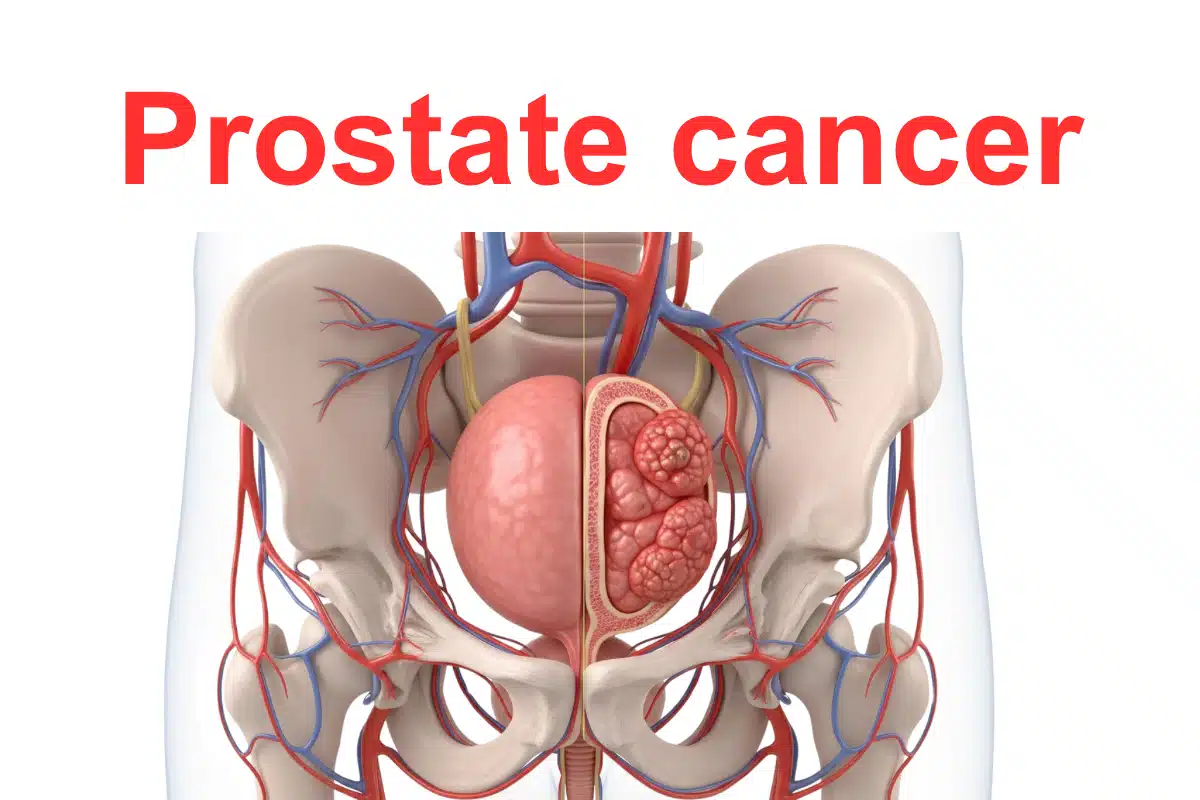
Prostate Cancer Awareness: Vital Information for Men’s Health
Prostate Cancer – Understanding this topic can change lives In India today, raising awareness helps men find issues earlier. The prostate is a small part of the male reproductive system called the prostate gland. Early checks lead to better outcomes and peace of mind.

Many cases grow slowly, while some are aggressive and need quick action. When found early, this condition is highly treatable and many people live full lives after care. Screening usually begins with blood testing to check PSA levels, then imaging or biopsy if needed.
Supportive care teams guide shared decisions. They help with testing, explain cancer risk versus certainty, and tailor choices to age and health. This guide draws on current clinical info and cancer research to help men and families in India make confident choices.
Key Takeaways – Prostate Cancer
- Awareness and timely checkups improve chances of long-term survival.
- PSA levels start the testing pathway; imaging and biopsy confirm diagnosis.
- Most cases are slow-growing, but some are aggressive—know the signs.
- Support teams provide culturally sensitive guidance for Indian families.
- The guide covers symptoms, screening, staging, treatments, and follow-up.
- Share this information to start important health conversations at home.
Understanding the Prostate and prostate cancer
The small gland below the bladder has important roles in reproduction and bladder control. It sits around the urethra and helps make fluid that mixes with sperm. Because of this position, changes in the gland can affect urine flow and sexual function.
What the prostate gland does
The gland produces seminal fluid and supports fertility. Its location near the bladder means growth can press on the urethra and change how men pass urine.
How cancer cells form and grow
Most often, normal cells in the gland change after genetic or age-related shifts. These changes can push cells to divide without the normal limits. When uncontrolled growth begins, it becomes a disease of abnormal cells.
Early developing prostate cancer often causes no symptoms, so screening and awareness are important. Not every case behaves the same: some stay confined to the gland and grow slowly, while others act more aggressively and can spread outside prostate boundaries.
When tissue is examined under a microscope, pathologists grade how much the cells differ from healthy tissue. This helps doctors decide which watchful steps or treatments suit each man. Knowing the signs and talking openly with a clinician can lead to earlier detection and better outcomes.
Key risk factors and who is more likely to develop prostate cancer
Understanding who faces higher odds helps men take timely steps. Age is the strongest predictor: risk rises after 50 and peaks in the late 60s, with an average diagnosis age around 67. One in eight men will be diagnosed in their lifetime, while about one in forty die from the disease worldwide.
Age, family history and inherited genes
Having a close relative with the disease raises a man’s chance of getting it. Variants in the BRCA2 gene also increase that risk.
Men with a strong family history should talk with a clinician earlier in the year and consider genetics-informed strategies for monitoring.
Race, ethnicity, and patterns seen in India
Global data show differences by race and ethnicity. In India, urbanization and unequal access to care shape how often the disease is found.
Screening uptake is lower where resources are limited, so regular health checks and awareness can catch silent cancer cells sooner.
- Know personal risk factors but remember they are not guarantees.
- Discuss family history with your doctor to set a screening plan.
- Prioritize routine checks to reduce long-term cancer risk.
Early signs, common symptoms, and when to see a doctor
Early stages often show no clear signs, so routine checks matter more than symptoms. Most early cases are silent. That is why regular health visits and simple testing can catch problems before they advance.
Common urinary signs include slow stream, trouble starting to pass urine, and getting up at night to pee. These symptoms are very often due to benign enlargement in men over 50, not serious disease.
Seek medical advice if you notice blood in urine or semen, sudden erectile changes that persist, unexplained weight loss, or constant back or bone pain. These are red flags that should prompt evaluation for spread or other issues.
Talk openly with a urologist or your primary care doctor in a stigma-free way. If symptoms last more than a few weeks, ask for testing and follow-up.
- Most early disease has no obvious warning signs — screening helps.
- Many urinary complaints are benign, but persistent problems need review.
- Set a reminder each year for a men’s health check that covers urinary and sexual well‑being.
Early detection helps catch problems before they move outside prostate boundaries. That leads to simpler care and better outcomes for men across India.
Prostate cancer screening: PSA tests and digital rectal exam
Simple screening tests can give clear, early information so men and families decide next steps.
Prostate-specific antigen (PSA) levels and what they mean
The prostate-specific antigen test is a blood draw that measures PSA levels. Typical values are around 1 ng/mL. A reading above 4 ng/mL raises concern, while values over 10 ng/mL suggest higher risk.
PSA can change with benign enlargement, infection, recent ejaculation, or medical procedures. Medicines like 5α-reductase inhibitors may lower values. Doctors often repeat a test in 4–6 weeks to confirm a rise.
Digital rectal exam: what to expect
The digital rectal exam is a quick office check. A clinician feels the gland for firmness or irregular areas. About 20–25% of abnormal findings prove to be true disease on further testing.
Pros and cons of screening and shared decision-making
Screening can reduce deaths by finding aggressive disease early. But it can also lead to overdiagnosis and unnecessary treatment. Shared decision-making helps balance benefits versus harms based on age, cancer risk, and personal values.
Screening timing and follow-up for high PSA levels
When tests show high PSA levels, next steps may include repeating the blood test, ordering free PSA percentage, Prostate Health Index, or 4Kscore, and using urine markers like PCA3. These tools refine risk and guide imaging or biopsy decisions.
- Prepare for testing: avoid ejaculation and recent procedures before a PSA check.
- Document results and bring questions to follow-up visits.
- Involve family members when helpful for shared choices.
From suspicion to diagnosis: imaging, biopsy, and Gleason score
When a screening test or exam raises concern, imaging and biopsy turn suspicion into a clear diagnosis. An MRI-first approach maps suspicious zones so biopsies target likely tumors and reduce unnecessary sampling.
MRI-first approaches and targeted biopsies
MRI helps distinguish dangerous lesions from harmless changes. Many centres now use MRI before biopsy to guide targeted cores. Targeted sampling improves detection of clinically important disease and reduces overdiagnosis.
Transrectal vs perineal biopsy pathways
Two common routes exist: transrectal (through the rectum) and transperineal (through the skin between scrotum and anus).
- Transrectal: quicker and widely available, but a higher infection risk.
- Perineal: lower infection rates and easier access to some regions of the gland; often done under local or general anesthesia.
Understanding the Gleason score and grade groups
Pathologists examine cores for abnormal patterns. Most tumours are adenocarcinomas made of varying patterns of cells.
“The Gleason system sums the two most common patterns (3–5) to give a score between 6 and 10.”
Grade Groups 1–5 then translate that score into risk tiers to guide treatment. PSA levels and a digital rectal exam combine with imaging and histology to complete the diagnostic picture.
Expect mild soreness and a short wait for results—usually days to two weeks. Keep copies of MRI and pathology reports for easy review across hospitals in India.
Staging the disease: TNM, AJCC stages, and spread outside the prostate
Staging combines exam findings, blood tests, and imaging to map disease spread. The AJCC system uses TNM: T for the primary tumor, N for regional lymph nodes, and M for distant metastases.
What the letters mean. T1–T2 tumours are confined to the gland. T3 extends beyond it (T3b reaches the seminal vesicles). T4 invades nearby organs. N1 means regional lymph nodes are involved. M1 shows distant sites are affected.

Localized versus advanced disease
Localized disease stays inside the organ and nearby tissue. Advanced disease means node or distant spread. That difference shapes choices: active surveillance, local treatment, or systemic therapy.
Imaging to find spread
PSMA PET finds small metastases more sensitively than CT. CT and MRI map soft tissue. Bone scans detect skeletal spread to reduce missed sites.
“Accurate staging prevents overtreatment and focuses care where it matters most.”
PSA levels, Grade Group, and TNM together determine AJCC stages I–IV and guide prognosis. Ask your team for written TNM and stage numbers to track decisions over time.
Localized disease management: active surveillance or treatment
Low-risk disease often lets men choose close monitoring instead of immediate intervention. This option balances safety with quality of life for many diagnosed in India.
What active surveillance means: regular checkups that watch for changes and delay invasive care unless needed.
How monitoring usually works
Typical schedules include PSA checks about every six months and a digital rectal exam annually.
MRI or repeat biopsy is done every 1–3 years, or sooner if tests change. At least half of men stay on surveillance long term.
When doctors recommend moving to treatment
- Consistent rise in PSA levels over serial tests.
- Higher Grade Group or biopsy upgrade.
- Noticeable growth on MRI or new symptoms.
Shared decisions matter: age, other health issues, and personal goals shape choices between watchful care and active treatment. Keep clear records and attend scheduled checks to keep this plan safe and effective.
Radiation therapy options: external beam radiation and brachytherapy
Modern radiation focuses on hitting the target while sparing nearby organs. Two common approaches are daily external beam schedules and single-session seed implants. Each has practical benefits and trade-offs to discuss with your team.
Intensity-modulated beam radiation therapy (IMRT)
IMRT delivers high-dose radiation (often >80 Gy) across multiple daily sessions. Treatment usually runs for several weeks with careful planning to limit dose to bladder and rectum.
Brachytherapy: permanent seed implants
Brachytherapy places tiny radioactive seeds directly inside the gland in one session. The seeds release dose over months and then fade, often letting men avoid longer daily visits.
Outcomes, side effects, and quality of life
Both approaches offer cancer control comparable to surgery for many localized cases. Key outcomes men care about include urinary and bowel function and sexual health.
- Common side effects: urinary irritation, increased urinary frequency, bowel urgency.
- Less common risks: erectile dysfunction, infertility, radiation proctitis, rare lumbar plexopathy.
- Care team support: pelvic physiotherapy, medicines, and planning can reduce and manage side effects.
Practical tips: stay hydrated, follow skin care and bowel prep instructions, plan work around daily sessions, and bring a family member to key visits. Ask about dose, targeting accuracy, and what each centre in India offers so you can choose confidently.
Radical prostatectomy: surgery choices and recovery
When imaging and biopsy point to localized disease, removing the gland can be a definitive step. Radical prostatectomy removes the gland, seminal vesicles, and the end of the vas deferens to reduce local risk.

Robot-assisted, laparoscopic, and open approaches
Robot-assisted surgery often means smaller cuts, less blood loss, and shorter hospital stays. Laparoscopic methods are similar but use different tools. Open surgery uses a larger incision and remains the choice in some centres.
Erectile dysfunction and urinary incontinence after surgery
Side effects can include urinary leakage and erectile dysfunction. Nerve-sparing techniques lower risk when tumor location allows. Early pelvic floor therapy and guided rehabilitation help recovery.
Surgeon experience and results
Surgeon skill strongly affects outcomes. Ask about a surgeon’s personal results for continence, potency, and local cancer control. Bring reports and discuss expected hospital stay, recovery timeline, and work‑leave plans.
- Prepare home support and easy-access rest areas.
- Plan 4–8 weeks off work depending on the approach and job.
- Discuss rehab options, including pelvic physiotherapy and sexual health support.
Managing metastatic prostate cancer and cancer spread to bones and lymph nodes
When disease spreads beyond the gland, it most often reaches bones and nearby lymph nodes.
First-line care aims to slow growth and ease symptoms. Hormone therapy lowers androgen signals the tumour uses to grow. Common side effects include hot flashes, low energy, and changes in libido. Doctors monitor blood tests and bone health while on therapy.
When hormone control weakens
If the disease becomes castration-resistant, teams keep hormonal agents and may add docetaxel chemotherapy or newer oral options. These next-line treatments can extend life and improve symptoms.
Relief for bone pain and fracture risk
Bone lesions cause pain, fractures, and rarely spinal cord compression. Imaging finds these sites. Targeted radiation therapy, bone-strengthening agents, and pain control protect mobility and daily function.
- Report new back pain, numbness, or weakness right away.
- Balance work and family by planning treatment blocks and seeking social support.
- Discuss costs and local resources—many Indian centres help with financial counselling and access to generics.
| Issue | Common approach | Goal | When to call |
|---|---|---|---|
| Hormone-sensitive spread | Androgen suppression, periodic labs | Control growth, delay progression | Rising marker or new symptoms |
| Castration-resistant disease | Docetaxel, second-line oral agents | Extend survival, ease symptoms | Worsening pain or function |
| Bone metastases | Targeted radiation, bisphosphonates/denosumab | Relieve pain, reduce fractures | New severe pain or limb weakness |
“Keep open communication with your team; early reporting of symptoms speeds care.”
Monitoring after treatment: PSA levels, recurrence, and salvage therapy
A clear follow-up plan helps men and families spot recurrence before symptoms appear. Regular testing turns uncertainty into timely action. Blood markers and imaging guide choices after surgery or radiation.
PSA kinetics after radiation and surgery
After radical prostatectomy, PSA should drop to very low or undetectable levels within two months. A persistent measurable value after this time raises concern.
After radiotherapy, PSA falls more slowly. The lowest point, or nadir, often occurs near two years. Small rises after the nadir may signal recurrence and deserve attention.
Detecting recurrence and directing salvage treatment
Biochemical recurrence means a confirmed rise in PSA from a prior low point. It is a lab-based signal rather than a symptom. Catching it early gives the best chance to control local return.
Advanced PET tracers — C-11 choline, F-18 fluciclovine, and PSMA-targeted scans — find tiny sites of disease. Imaging can show whether the rise is in the prostate bed or at distant sites, so salvage radiation targets the correct location.
Gleason score and initial stage help predict recurrence risk. Higher grade groups need closer surveillance and earlier imaging.
- Typical follow-up: PSA at 6–12 weeks after surgery, then every 3–6 months the first two years.
- After radiation: check every 3–6 months for two years, then spacing to every 6–12 months.
- Ask about advanced PET imaging when PSA is low but rising to plan precise salvage therapy.
| Situation | Usual action | Goal |
|---|---|---|
| Detectable PSA after surgery | Repeat test, consider early PET, offer salvage radiation to prostate bed | Eradicate local recurrence, reduce progression (~75% benefit) |
| Rising PSA after radiotherapy | Assess PSA kinetics, image with PSMA or choline PET, target salvage radiation if local | Delay systemic therapy, control local disease |
| PSA rise with distant PET uptake | Systemic treatment planning, multidisciplinary review | Manage spread, symptom control, life prolongation |
“Early reporting of small PSA rises and use of sensitive imaging improve the chance that salvage therapy will succeed.”
Living well with prostate cancer in India: support, sexual health, and awareness
Living well after a diagnosis depends on practical support, open talks about intimacy, and access to reliable resources. Recovery blends medical follow-up with emotional care and lifestyle choices.
Addressing erectile dysfunction and fertility concerns
Start conversations early. Medicines, vacuum devices, injections, and implants are options to discuss with a urologist and partner. Counselling helps couples adapt and rebuild intimacy.
Men planning families should consider sperm banking before treatments that may affect fertility. Ask your team about timing and local services in India.
Patient support resources and Cancer Awareness Month actions
- Join community screenings and webinars during September awareness drives to learn about prostate cancer screening and early detection.
- Attend expert talks hosted by foundations; speakers like Dr. Phillip Koo and Dr. Oliver Sartor often share useful updates from cancer research.
- Find support groups, helplines, and online forums in India for daily coping, financial guidance, and peer advice.
- Follow whole-person care: sleep, diet, exercise, and mental health support shape long-term resilience.
| Need | Practical step | Where to find it | When to act |
|---|---|---|---|
| Erectile dysfunction | Medications, devices, counseling | Urology clinic, sexual health services | At first post‑treatment visit |
| Fertility planning | Sperm banking, fertility referral | Fertility centres in major Indian cities | Before starting treatment |
| Peer support & info | Support groups, webinars, screening events | NGOs, foundations, hospital programs | Ongoing; join during Awareness Month |
Research progress and clinical trials shaping future treatments
New imaging and drug advances are changing how doctors find small spread and choose therapy. Landmark discoveries in hormone therapy set the stage decades ago. Researchers like Huggins and Schally changed practice and won global recognition for those insights.
Modern tools such as PSMA PET now spot tiny metastases earlier. This improves staging, directs focused salvage treatments, and refines response assessment after therapy.
Clinical trials keep testing how best to sequence systemic drugs and combine them with targeted local care. Trials often offer access to newer agents and imaging-guided approaches that are not yet widely available.
What this means for patients in India
- Historic hormone therapy work built today’s standards of care and informed modern drug development.
- PSMA PET reshapes staging and helps detect recurrence at lower blood marker levels.
- Ask your team about local trial options—participation can widen treatment choices.
- Research is refining how to sequence therapy to extend life while protecting quality of life.
- Collaborations between global centres and Indian institutions bring innovations closer to home.
“Clinical trials translate lab progress into better tests and smarter treatment plans.”
| Advance | Impact | How patients benefit |
|---|---|---|
| Hormone therapy breakthroughs (Huggins, Schally) | Established endocrine control as core therapy | Longer survival, foundational systemic options |
| PSMA PET imaging | Higher sensitivity for small metastases | Earlier detection, targeted salvage therapy |
| Global clinical trials | New drug sequences and combo strategies | Access to cutting-edge treatments, better outcomes |
Conclusion
Early detection and informed choices turn uncertainty into clear steps that save lives. Simple screening, open talks about cancer risk, and organised records help men and families act fast.
Most men with localized disease enjoy excellent long-term results with active surveillance or targeted treatment. For advanced prostate scenarios, modern systemic therapies and symptom care can maintain function and comfort.
If disease reaches outside prostate boundaries, coordinated teams still aim to control growth and protect quality of life. Talk with a trusted clinician about options, keep reports handy, and involve family in decisions.
Please share this guide with friends and relatives to spread awareness and help more men get timely care.
FAQ
What does the prostate gland do?
The prostate produces fluid that helps nourish and transport sperm. It sits under the bladder and surrounds the urethra, so changes in size or health can affect urination and sexual function.
How do abnormal cells form and grow in this gland?
Abnormal cells can arise from DNA changes in glandular tissue. Over time, these cells may multiply, form a tumor, and spread locally or to lymph nodes and bone if unchecked.
Who is at higher risk due to age, family history, or genetics like BRCA2?
Risk rises with age, and having a close relative with a history increases chances. Pathogenic BRCA2 variants also raise risk and may lead to more aggressive disease, so family testing and genetic counseling help guide decisions.
How do race and ethnicity affect risk, and are there patterns seen in India?
Risk varies by population. Some groups show higher incidence or aggressive forms. In India, increasing detection and awareness mean more diagnoses at earlier or advanced stages, so outreach and screening tailored to local needs improve outcomes.
What early signs and symptoms should prompt a doctor’s visit?
New urinary changes, blood in urine or semen, persistent pelvic or back pain, or unexplained weight loss merit evaluation. Symptoms can be subtle, so report any lasting changes to your clinician.
What does a PSA test measure and how are levels interpreted?
PSA is a blood marker produced by glandular tissue. Higher values may suggest a problem but are not specific; inflammation, enlargement, and other causes can raise PSA. Trends and age-adjusted ranges guide next steps.
What happens during a digital rectal exam (DRE)?
A clinician gently feels the gland through the rectal wall to check for hard areas or lumps. It complements PSA testing and is quick, though some findings require further imaging or biopsy.
What are the pros and cons of screening and how is shared decision-making used?
Screening can find disease early but may lead to overdiagnosis and unnecessary treatment. Shared decision-making balances personal risk, life expectancy, and values to decide whether to test and how often.
If PSA is high, what follow-up testing is recommended?
Repeat PSA, urine tests for infection, or MRI-first imaging are common. If suspicion remains, a targeted biopsy is often next to obtain tissue and confirm diagnosis.
What is an MRI-first approach and why use targeted biopsies?
Multiparametric MRI identifies suspicious areas. Targeted biopsies sample those spots, improving detection of clinically significant disease while reducing unnecessary sampling.
How do transrectal and transperineal biopsy pathways differ?
Transrectal uses the rectal route and is quicker; transperineal goes through the skin between scrotum and anus and lowers infection risk. Choice depends on anatomy, infection risk, and local expertise.
What does the Gleason score and grade group tell patients?
The Gleason pattern and grade group describe tumor aggressiveness under the microscope. Higher scores mean more aggressive cells and help guide treatment choices and prognosis.
How is staging done and what do TNM and AJCC stages mean?
Staging combines tumor size/local invasion (T), lymph node involvement (N), and distant spread (M). AJCC groups these into stages that predict outlook and guide treatment planning.
What imaging detects spread beyond the gland, like to lymph nodes or bone?
PSMA PET is highly sensitive for small metastases. CT and bone scans remain useful for detecting larger nodal or bone involvement, helping plan systemic or local therapy.
When is active surveillance appropriate and what does it involve?
Low-risk, slow-growing disease often suits surveillance. It includes periodic PSA checks, DRE, MRI, and repeat biopsy to monitor for signs that warrant treatment.
What prompts a switch from surveillance to active treatment?
Rising PSA velocity, higher grade on repeat biopsy, growing MRI lesions, or new symptoms typically trigger discussion of surgery, radiation, or other therapies.
What are modern external beam and brachytherapy options?
External beam uses targeted radiation like IMRT to spare healthy tissue. Brachytherapy places radioactive seeds inside the gland for focused dose delivery. Both aim to control disease with different recovery and side‑effect profiles.
What is intensity-modulated beam radiation therapy (IMRT)?
IMRT sculpts radiation beams to the tumor shape, reducing exposure to bladder and rectum. It lowers some side effects while delivering effective tumor doses.
How do permanent seed implants work in brachytherapy?
Tiny radioactive seeds are placed into the gland and emit low-dose radiation over time. They remain permanently but decay to negligible activity, offering a one-time procedure for selected cases.
What outcomes and side effects affect quality of life after radiotherapy?
Many achieve long-term control. Common side effects include urinary urgency, bowel changes, and sexual dysfunction; most improve over months, and supportive care helps manage symptoms.
What surgical approaches exist for radical removal and how do they compare?
Options include robot-assisted, laparoscopic, and open prostatectomy. Robot-assisted techniques offer precision and often quicker recovery, but surgeon skill and experience strongly influence results.
How common are erectile dysfunction and urinary incontinence after surgery?
Risk varies with age, baseline function, and nerve-sparing technique. Pelvic floor therapy, medications, and devices can improve recovery for many men.
How does surgeon experience affect outcomes?
Higher surgical volume and specialized training correlate with fewer complications and better functional and oncologic results. Ask about outcomes when choosing a team.
How is advanced disease managed when it spreads to bones or lymph nodes?
Systemic therapy—starting with hormone suppression—controls growth. Treatments may include targeted agents, chemotherapy, bone-strengthening drugs, and radiation to relieve pain.
What are the basics of hormone therapy and when is it used?
Hormone therapy lowers or blocks male hormones that fuel tumor cells. It’s a cornerstone for advanced disease and is combined with other agents depending on response.
When is chemotherapy or next-line treatment recommended?
Chemotherapy is used when disease becomes resistant to hormone suppression or presents with high-risk features. Newer agents and sequencing depend on prior treatments and biomarker testing.
How are bone pain and fracture risk managed?
Bone-targeted drugs like bisphosphonates or denosumab reduce fracture risk. Radiation, analgesics, and orthopedic interventions relieve focal pain and prevent complications.
What monitoring is needed after treatment using PSA levels?
PSA trends indicate remission or recurrence. After surgery, undetectable levels are expected; after radiation, PSA may fall more slowly. Regular checks help catch recurrence early.
How is biochemical recurrence identified and treated with salvage therapy?
Rising PSA after definitive therapy signals biochemical recurrence. Imaging like PSMA PET localizes disease; salvage radiation or systemic therapy may be offered based on findings.
What support exists in India for men dealing with sexual health and fertility concerns?
Urology clinics, sexual medicine specialists, and fertility centers provide counseling, rehabilitation, and options like sperm banking. Patient groups and awareness campaigns also offer practical help.
Where can patients find support resources and actions during Cancer Awareness Month?
Hospitals, NGOs, and national programs host screening camps, educational sessions, and support groups. Participating raises awareness and connects men with local services.
What research and clinical trials are shaping future treatments?
Trials test improved imaging, novel hormone agents, immunotherapies, and targeted drugs. Participation helps access new options and advances care for future patients.

Dr. Shabbir Hussain, BPT
Licensed Physiotherapist | Clinical Rehabilitation Specialist
Maharashtra OTPT Council Reg. No.: PR-2021/08/PT/009532
Society of Onco Physiotherapists Reg. No.: SOP/00033/LM
Dr. Shabbir Hussain, BPT, Registered Physiotherapist with over 8 years of experience in physiotherapy, kidney rehabilitation, oncological rehabilitation, and lymphedema management. He specializes in balance disorders, pain management, musculoskeletal rehabilitation, strengthening programs, and VR-based rehabilitation.