
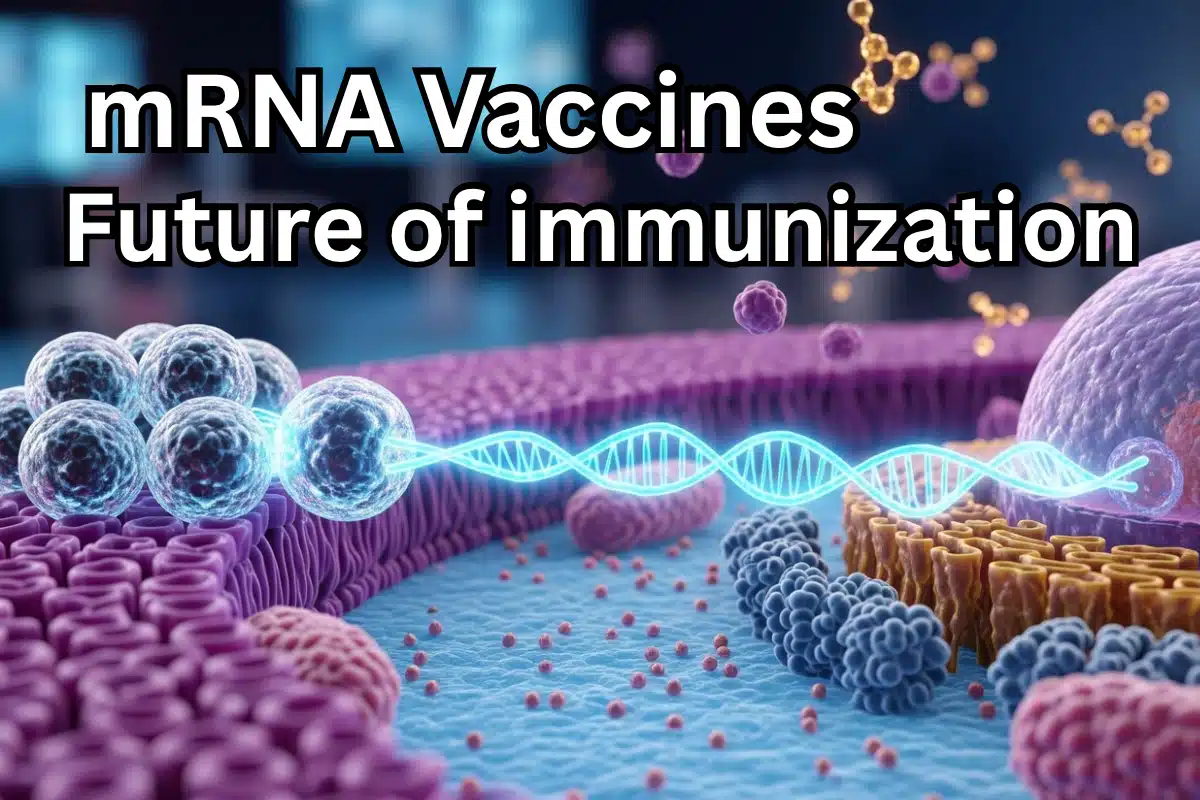
mRNA Vaccines: Unlocking the Future of Immunization
mRNA Vaccines: Unlocking the Future of Immunization Medical science has taken a giant leap forward with the introduction of mRNA vaccines.
Unlike traditional methods, these next-generation treatments use synthetic messenger RNA to instruct cells to produce harmless viral proteins.
This triggers the immune system to build defenses without exposure to live pathogens.

Decades of research paved the way for this breakthrough. Scientists studied the technology for over 30 years before its successful application during global health emergencies. The FDA’s rigorous approval process ensures these vaccines meet strict safety standards before public use.
What makes this approach revolutionary? It allows rapid adaptation to new threats while maintaining high effectiveness. Researchers now explore applications beyond infectious diseases, including potential treatments for cancer and rare genetic conditions.
Key Takeaways – mRNA Vaccines: Unlocking the Future of Immunization
- mRNA technology teaches cells to create protective proteins safely
- Three decades of research support this medical advancement
- Regulatory agencies enforce strict safety evaluations
- Potential extends to various health conditions
- Represents a faster response system against emerging threats
How mRNA Vaccines Work: A Breakthrough in Immunization
A groundbreaking approach harnesses natural cellular processes to build immunity. Instead of introducing weakened pathogens, these treatments deliver genetic blueprints to cells. The body then produces harmless fragments, like the spike protein, to train defenses.
The Role of Messenger RNA in Protein Production
Messenger RNA (mRNA) acts as a temporary instruction manual. Inside cells, it directs the creation of specific protein fragments. These fragments mimic parts of a virus, prompting the immune response without the actual threat.
Lipid nanoparticles protect the mRNA until it reaches its destination. Once inside, the cells break down the mRNA after completing protein synthesis. This ensures no long-term genetic changes occur.
Triggering the Immune Response Without the Virus
The immune system recognizes the foreign spike protein fragments. B and T lymphocytes then create memory cells, preparing the body for future encounters. Since no live virus is used, there’s zero risk of infection.
Key points:
- mRNA never enters the cell nucleus or alters DNA
- The process mimics natural infection responses safely
- Memory cells provide long-term protection
The Science Behind mRNA Vaccine Technology
Scientists have unlocked a new way to teach the body to defend itself using genetic instructions. This method skips traditional steps, like growing weakened viruses, and instead delivers coded messages to cells.
From Lab to Cell: How mRNA Instructions Are Delivered
The process starts with an injection into the upper arm muscle. Tiny fat bubbles, called lipid nanoparticles, carry the mRNA to the site. Once inside, cells read the instructions to build harmless viral fragments.
Ribosomes—the cell’s protein factories—translate the mRNA into protein spikes. These spikes trigger the immune system to create defenses. The mRNA breaks down within days, leaving no trace.
Why mRNA Vaccines Don’t Alter DNA
Some worry about genetic changes, but mRNA never enters the cell nucleus where DNA resides. The NIH confirms this in multiple studies. “mRNA cannot integrate or modify genetic material,” states an FDA-reviewed report.
Earlier RNA treatments faced stability issues. Modern versions use improved lipid coatings to protect the mRNA until delivery. This ensures precise, temporary action.
| Feature | mRNA Technology | Traditional Vaccines |
|---|---|---|
| Development Speed | Weeks to months | Years |
| Genetic Interaction | No DNA contact | N/A |
| Production | Synthetic process | Virus cultivation |
The FDA’s full approval of COVID-19 vaccines followed rigorous trials. Over 300 million doses in the U.S. alone support their safety and efficacy.
Benefits of mRNA Vaccines Over Traditional Methods
Next-generation immunization offers unprecedented advantages over older techniques. By leveraging synthetic biology, these innovations address critical limitations of conventional approaches. Faster development cycles and enhanced safety profiles redefine what’s possible in disease prevention.

Faster Development and Production Timelines
Traditional types vaccines, like protein subunit versions, often require years to develop. Moderna’s COVID-19 vaccine, for example, was designed in just two days. This speed stems from synthetic mRNA production, bypassing pathogen cultivation.
Scalability further sets this method apart. Unlike egg-based systems, synthetic processes avoid supply bottlenecks. Researchers can swiftly adapt formulas to combat emerging variants or entirely new threats.
Enhanced Safety and Precision Targeting
Without live viruses, contamination risks plummet. Protein subunit vaccines sometimes need adjuvants to boost responses, but mRNA versions help protect without these additives. This reduces side effects while maintaining efficacy.
NIH-funded studies explore thermostable formats for global distribution. Such advances could democratize access to life-saving immunizations, especially in resource-limited regions.
| Feature | mRNA | Traditional |
|---|---|---|
| Production Time | Weeks | Years |
| Pathogen Use | None | Required |
| Adjuvants | Rarely | Common |
Note: Data reflects comparative advantages of types vaccines.
Current Applications: COVID-19 and Beyond
The fight against COVID-19 showcased the power of synthetic biology in modern medicine. These tools not only halted a pandemic but also opened doors for treating other diseases. From infectious threats to cancer, the scope keeps expanding.
Neutralizing SARS-CoV-2 with Precision
COVID-19 vaccines target the spike protein, a key part of the virus causes covid. By training the body to produce antibodies, they block viral entry into cells. CDC data confirms a *90%+ reduction* in hospitalizations among vaccinated groups.
The immune system recognizes these proteins as foreign, triggering defenses. Memory cells then stand guard for future infections. This approach avoids live viruses, eliminating infection risks.
Pioneering Treatments for Other Conditions
Researchers now test this technology against HIV, rabies, and melanoma. BioNTech’s cancer trials use mRNA to activate T-cells against tumors. Early results show promising immune responses.
NIH partnerships explore applications for malaria and autoimmune disorders. The FDA’s Emergency Use Authorization (EUA) fast-tracks critical treatments during crises.
| Application | Progress | Key Benefit |
|---|---|---|
| COVID-19 | Global deployment | Rapid variant adaptation |
| Cancer | Phase 2 trials | T-cell activation |
| Malaria | Preclinical research | Thermostable designs |
Note: Data reflects current mRNA-based clinical developments.
Conclusion
The rapid adoption of mRNA technology marks a turning point in disease prevention. Over 650 million doses administered in the U.S. demonstrate its safety and effectiveness, with rare adverse events reported. Leading institutions like the Cleveland Clinic confirm its reliability.
This approach offers unmatched speed against outbreaks while helping protect vulnerable populations. Its adaptable design paves the way for annual flu shots and personalized cancer therapies. The immune system responds precisely without exposure to live pathogens.
Looking ahead, scalable solutions could reshape global health. Staying informed about FDA-approved advancements ensures readiness for emerging threats. Together, we’re building a safer future through innovation.
FAQ
How do mRNA vaccines differ from traditional ones?
Unlike conventional vaccines that use weakened or inactivated viruses, these new immunizations deliver genetic instructions to cells. This teaches the body to produce a harmless piece of the virus, triggering protective defenses.
Can these immunizations alter human DNA?
No. The genetic material in these shots never enters the cell’s nucleus where DNA is stored. It simply provides temporary instructions for making proteins before breaking down naturally.
Why were scientists able to develop COVID-19 shots so quickly?
Researchers had been studying this technology for decades. When the pandemic hit, existing knowledge allowed rapid adaptation to target SARS-CoV-2’s spike protein specifically.
What other illnesses might this technology treat?
Medical teams are testing this approach for influenza, HIV, rabies, and even cancer. The precision of protein targeting opens doors for many conditions.
How does the body react to these immunizations?
Cells read the genetic instructions to build viral proteins. The immune system then recognizes these as foreign and creates antibodies, preparing defenses against future exposure.
Are there long-term effects from these new immunizations?
Rigorous monitoring by health agencies like the FDA continues, but current data shows most reactions are mild and temporary. The technology’s components break down quickly in the body.
Why do some people experience side effects?
Temporary reactions like soreness or fever indicate the immune system is responding as intended. These typically resolve within days and show the body building protection.

Dr. Shabbir Hussain, BPT
Licensed Physiotherapist | Clinical Rehabilitation Specialist
Maharashtra OTPT Council Reg. No.: PR-2021/08/PT/009532
Society of Onco Physiotherapists Reg. No.: SOP/00033/LM
Dr. Shabbir Hussain, BPT, Registered Physiotherapist with over 8 years of experience in physiotherapy, kidney rehabilitation, oncological rehabilitation, and lymphedema management. He specializes in balance disorders, pain management, musculoskeletal rehabilitation, strengthening programs, and VR-based rehabilitation.