
Medically Reviewed By: Dr. Shabbir Hussain, BPT (Licensed Physiotherapist)
Fact Checked: This article has been reviewed for medical accuracy using current clinical guidelines and evidence-based sources, including recommendations from the American Heart Association (AHA), American College of Cardiology (ACC), and other trusted medical organizations.
📖 Reading Time: 10 minutes
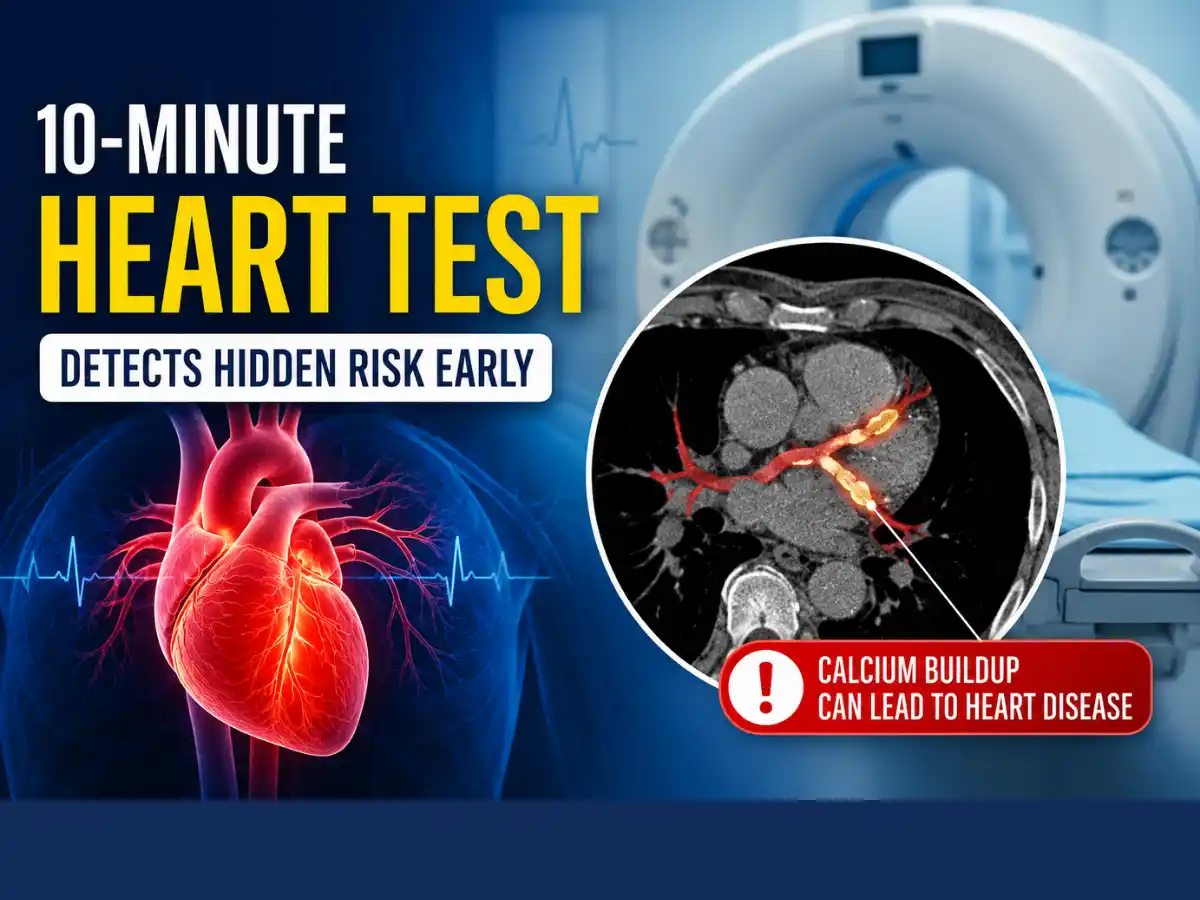
Coronary Calcium Score: The 10-Minute Heart Test That Can Detect Silent Heart Disease Early
Millions of people have blocked heart arteries without any warning signs. A Coronary Calcium Score test can detect early calcium deposits before symptoms appear, helping identify heart disease years before a heart attack occurs.
Maintaining heart health is a top priority for many individuals, especially those with a family history of heart disease.
One effective way to ensure proactive heart care is by undergoing a coronary calcium score test.
This diagnostic tool helps identify early signs of heart disease, allowing for timely interventions.
The coronary calcium score test is a simple, non-invasive procedure that measures the amount of calcium in the coronary arteries.
A high score can indicate a higher risk of heart disease, enabling individuals to take preventive measures.
By understanding the results, individuals can work with their healthcare providers to develop a personalized plan for cardiac care.
⚡ Quick Facts: Coronary Calcium Score Test
| 🩺 Test Type | Non-invasive CT (Computed Tomography) scan |
| ⏱ Duration | Approximately 10 minutes |
| 💉 Pain Level | Painless (no needles or injections required) |
| ☢ Radiation Exposure | Low-dose radiation |
| ❤️ Detects | Calcium deposits (plaque) in the coronary arteries |
| 👥 Best For | Adults with borderline or intermediate risk of heart disease |
| 📊 Score Range | 0 to 400+ (higher scores indicate greater cardiovascular risk) |
| 🩹 Preparation | Usually no fasting or special preparation is required (follow your healthcare provider’s instructions) |
| 🎯 Main Benefit | Detects silent coronary artery disease early, allowing preventive treatment before symptoms or a heart attack occur. |
Quick Summary: A Coronary Calcium Score (CAC) test is a fast, painless CT scan that measures calcium buildup in the heart’s arteries. It helps estimate future cardiovascular risk and supports personalized prevention strategies based on current clinical guidelines.
Why Cardiologists Recommend a Coronary Calcium Score Test
Many people develop coronary artery disease silently without experiencing any symptoms. Cardiologists often recommend a Coronary Calcium Score (CAC) test for adults at borderline or intermediate risk because it can detect hidden calcium deposits before a heart attack occurs.
- Identifies early coronary artery disease
- Provides a personalized cardiovascular risk assessment
- Helps determine whether cholesterol-lowering medication (statins) is needed
- Supports preventive treatment before symptoms develop
- Improves decision-making alongside blood pressure and cholesterol results
Expert Tip: A CAC scan is most useful for people without symptoms who want to better understand their future heart disease risk.
Understanding Coronary Calcium and Heart Disease
Understanding coronary calcium is crucial for assessing the risk of heart disease and the underlying process of atherosclerosis.
Coronary calcium refers to the deposits of calcium within the coronary arteries, which supply blood to the heart muscle.
The Link Between Calcium Deposits and Atherosclerosis
Calcium deposits in the coronary arteries are a hallmark of atherosclerosis, a condition where plaque builds up in the arterial walls, potentially leading to their hardening and narrowing.
This process can restrict blood flow to the heart, increasing the risk of heart disease.
How Calcium Indicates Plaque Formation
The presence of calcium deposits is a marker of plaque formation.
As plaque accumulates, it can become calcified, making it detectable through imaging tests.
The extent of calcification is directly related to the overall plaque burden.
The Silent Progression of Coronary Artery Disease
Coronary artery disease often progresses silently, without noticeable symptoms, until a significant blockage occurs.
The buildup of calcium deposits is a key indicator of this silent progression, highlighting the importance of early detection and preventive measures.
Real Patient Story
A 52-year-old man with mildly elevated cholesterol and a family history of heart disease felt completely healthy. His Coronary Calcium Score revealed significant calcium buildup despite having no symptoms.
His cardiologist immediately recommended lifestyle modifications, cholesterol-lowering medication, regular exercise, and dietary changes. Early detection helped reduce his future cardiovascular risk before a heart attack could occur.
The Science Behind Calcium Scoring
Calcium scoring is based on the principle that the presence of calcium in the coronary arteries is a marker of atherosclerosis, a condition where plaque builds up in the arteries.
The test uses computed tomography (CT) scans to detect and quantify calcium deposits. The score is calculated based on the amount and density of calcium detected.
When Doctors Recommend This Test
Doctors recommend the coronary calcium score test for individuals at intermediate risk of heart disease, typically those with a mix of risk factors such as high blood pressure, high cholesterol, smoking, or a family history of heart disease. The test helps to further stratify risk and guide treatment decisions.
| Risk Category | Coronary Calcium Score | Interpretation |
|---|---|---|
| Low | 0 | Low risk of heart disease |
| Moderate | 1-100 | Moderate risk, consider lifestyle changes |
| High | 101-400 | High risk, may require medical intervention |
| Very High | >400 | Very high risk, aggressive treatment recommended |
By understanding an individual’s coronary calcium score, healthcare providers can develop a personalized plan to reduce the risk of heart disease.
Latest Heart Disease Statistics
- Heart disease remains the leading cause of death worldwide.
- Millions of adults have coronary artery disease without knowing it because symptoms may not appear until advanced stages.
- Many first heart attacks occur in people who previously had no warning symptoms.
- Early identification of coronary artery calcium allows healthcare providers to begin preventive treatment before serious complications develop.
Takeaway: Detecting hidden plaque early can help reduce the risk of future cardiovascular events through timely lifestyle changes and medical management.
Can a Coronary Calcium Score Test Prevent Heart Attacks?
No. The scan itself does not prevent a heart attack.
However, it can identify hidden coronary artery disease years before symptoms develop. This allows doctors to recommend preventive treatments such as:
- Heart-healthy diet
- Regular physical activity
- Smoking cessation
- Blood pressure control
- Cholesterol-lowering medications when appropriate
- Weight management
The greatest benefit of the test is helping people take action early, before irreversible heart damage occurs.
Common Myths About Coronary Calcium Score
| Myth | Fact |
|---|---|
| Only older adults need this test. | Adults with cardiovascular risk factors may benefit regardless of age. |
| A normal ECG means my arteries are healthy. | An ECG cannot detect calcium buildup inside coronary arteries. |
| A calcium score of zero guarantees no heart disease. | A zero score suggests very low short-term risk but does not eliminate all cardiovascular risk. |
| The test replaces healthy lifestyle habits. | Lifestyle modification remains essential regardless of the calcium score. |
Interpreting Your Coronary Calcium Score Results
Interpreting your coronary calcium score results can seem daunting, but it’s a crucial step in heart care. Understanding what your score means is essential for assessing your cardiovascular risk and determining the next steps in your heart health journey.
The Agatston Scoring System
The Agatston scoring system is the most widely used method for quantifying coronary artery calcium. Developed by Dr. Arthur Agatston, this system calculates the amount of calcium in the coronary arteries, providing a score that reflects the extent of coronary artery disease.
Key aspects of the Agatston scoring system include:
- Quantification of calcium based on the density and area of calcified plaques
- Use of CT scans to visualize and measure calcium deposits
- A scoring range that typically spans from 0 to over 400
Risk Categories Based on Score Ranges
Coronary calcium scores are categorized into different risk groups based on the score range. These categories help clinicians and patients understand the level of cardiovascular risk.
| Score Range | Risk Category | Implications |
|---|---|---|
| 0 | Very Low Risk | Indicates the absence of detectable coronary artery calcium |
| 1-100 | Low to Moderate Risk | Suggests mild coronary artery disease |
| 101-400 | Moderate to High Risk | Indicates a higher burden of coronary artery disease |
| >400 | High Risk | Signifies extensive coronary artery disease |
Zero Score: What It Means
A coronary calcium score of 0 indicates that no coronary artery calcium was detected. This suggests a very low risk of cardiovascular events in the short term. However, it’s essential to continue monitoring risk factors and maintaining a healthy lifestyle.
Moderate to High Scores: Implications
Scores ranging from 101 to over 400 indicate a higher risk of cardiovascular events. These scores suggest significant coronary artery disease, necessitating further evaluation and potentially more aggressive management of risk factors.
Age and Gender-Adjusted Interpretations
Interpretation of coronary calcium scores can be adjusted based on age and gender. For instance, a score that is high for a younger individual may indicate a higher relative risk compared to an older person with the same score.
“The presence and extent of coronary artery calcium is a marker of atherosclerotic disease burden and is strongly correlated with the risk of future cardiovascular events.” – American Heart Association
Understanding your coronary calcium score in the context of your overall health profile is crucial. It provides valuable insights into your cardiovascular risk and guides personalized preventive strategies.
Benefits of Early Detection Through Coronary Calcium Score Test
Detecting coronary calcium early can be a game-changer in managing and preventing heart disease. By understanding the presence and extent of coronary artery calcification, individuals can take proactive steps towards better heart health.
Preventing Major Cardiac Events
One of the significant benefits of early detection is the prevention of major cardiac events such as heart attacks. A coronary calcium score test helps identify those at risk, allowing for timely interventions that can prevent such events.
Personalizing Treatment Approaches
Early detection through a coronary calcium score test enables healthcare providers to personalize treatment approaches based on the individual’s risk profile. This tailored strategy can include medication, lifestyle changes, or further testing.
| Score Range | Risk Category | Recommended Action |
|---|---|---|
| 0 | Very Low Risk | Continue healthy lifestyle habits |
| 1-100 | Mild Risk | Monitor risk factors, consider preventive measures |
| 101-400 | Moderate Risk | Aggressive risk factor modification, possible medication |
How Calcium Scoring Compares to Other Cardiac Tests
When it comes to assessing heart health, various tests are available, each with its own strengths and limitations. Calcium scoring is one such test that has gained prominence for its ability to detect coronary artery disease early. To understand its value, it’s essential to compare it with other cardiac tests.
Non-Invasive Alternatives
Several non-invasive tests are used to evaluate heart health. These include:
- Stress Tests: These measure the heart’s ability to function during physical stress.
- Echocardiograms: Ultrasound tests that provide images of the heart’s structure and function.
- CT Angiography: A more detailed imaging test that visualizes the coronary arteries.
Stress Tests and Echocardiograms
Stress tests and echocardiograms are valuable for assessing heart function and detecting potential issues. However, they don’t directly measure calcium deposits in the coronary arteries like a calcium score test.
CT Angiography
CT angiography provides detailed images of the coronary arteries, helping identify blockages and plaque buildup. While it offers more detailed information than calcium scoring, it involves more radiation and contrast dye.
Invasive Diagnostic Procedures
Invasive procedures, such as coronary angiography, involve inserting a catheter into the arteries to directly visualize blockages. These tests are typically reserved for patients with a high likelihood of needing intervention.
Complementary Testing Approaches
Calcium scoring can be used alongside other tests to provide a comprehensive view of heart health. For instance, combining it with stress testing or CT angiography can offer insights into both calcium buildup and heart function.
When Should You Repeat a Coronary Calcium Score Test?
The need for repeat testing depends on your initial calcium score, age, cardiovascular risk factors, and your healthcare provider’s recommendation.
| Initial CAC Score | General Follow-up Guidance |
|---|---|
| 0 | Repeat in about 5 years if cardiovascular risk remains low. |
| 1–99 | Repeat only if it may change treatment decisions. |
| 100 or higher | Routine repeat scanning is usually unnecessary; focus on treatment and risk factor control. |
Important: Repeat testing should always be based on individual medical advice rather than a fixed schedule.
Taking Action: Next Steps After Receiving Your Score
With your coronary calcium score in hand, you can start making informed decisions about your heart health. Understanding the implications of your score and the subsequent steps can empower you to take control of your cardiovascular well-being.
Medical Interventions for Different Score Ranges
The medical interventions recommended for you will largely depend on your coronary calcium score. Generally, scores are categorized into different risk groups, guiding healthcare providers in suggesting appropriate treatments.
Medication Options
For individuals with higher scores, indicating a greater plaque burden, medication may be prescribed to manage risk factors such as high cholesterol or hypertension. Statins are commonly recommended to reduce LDL cholesterol levels.
When Further Testing is Needed
If your score is high or if there are other concerning factors, your healthcare provider may recommend additional testing, such as a stress test or coronary angiography, to further assess your heart health.
Lifestyle Modifications for Heart Health
Lifestyle changes play a crucial role in managing heart health, regardless of your score. This includes adopting a heart-healthy diet, engaging in regular physical activity, quitting smoking, and managing stress.
| Lifestyle Change | Benefit |
|---|---|
| Adopting a heart-healthy diet | Reduces risk of heart disease |
| Regular physical activity | Improves cardiovascular health |
| Quitting smoking | Significantly reduces cardiovascular risk |
Follow-up Testing and Monitoring Recommendations
The frequency of follow-up testing depends on your initial score and other risk factors. Generally, individuals with a score of 0 may not need repeat testing for 5-10 years, while those with higher scores may require more frequent monitoring.
By understanding your coronary calcium score and taking appropriate next steps, you can significantly reduce your risk of heart disease and improve your overall cardiovascular health.
Latest Clinical Evidence and Guideline Recommendations
1. American Heart Association (AHA)
The American Heart Association (AHA) recognizes the Coronary Artery Calcium (CAC) score as a valuable tool for improving cardiovascular risk assessment in adults without known heart disease. A CAC scan helps detect hidden calcium deposits in the coronary arteries before symptoms develop, allowing earlier preventive treatment. According to the AHA, higher CAC scores are associated with a greater risk of future heart attack, stroke, and other cardiovascular events, while a CAC score of 0 generally indicates a very low short-term risk in most asymptomatic adults.
2. American College of Cardiology (ACC)
The American College of Cardiology (ACC) recommends considering Coronary Artery Calcium scoring in adults with borderline or intermediate cardiovascular risk when it is unclear whether cholesterol-lowering medication (statin therapy) should be started.
Current ACC recommendations include:
- CAC Score = 0: Statin therapy may often be deferred unless the person has diabetes, is a smoker, or has a strong family history of premature heart disease.
- CAC Score = 1–99: Statin therapy is generally favored, particularly in adults older than 55 years.
- CAC Score ≥100 or ≥75th percentile for age and sex: Statin therapy is recommended because cardiovascular risk is significantly increased.
3. Society of Cardiovascular Computed Tomography (SCCT)
The Society of Cardiovascular Computed Tomography (SCCT) supports the use of non-contrast cardiac CT for Coronary Artery Calcium scoring as a standardized, reliable, and low-radiation method for detecting early coronary atherosclerosis.
SCCT guidance emphasizes that CAC scoring:
- Detects silent coronary artery disease before symptoms appear.
- Improves cardiovascular risk prediction beyond traditional risk factors alone.
- Helps clinicians personalize preventive treatment and avoid unnecessary medication in low-risk individuals.
- Should be interpreted alongside age, sex, blood pressure, cholesterol levels, diabetes status, smoking history, and family history rather than as a standalone test.
Clinical Takeaway: Current recommendations from the AHA, ACC, and SCCT support Coronary Artery Calcium scoring as one of the most effective non-invasive tools for identifying hidden coronary artery disease and guiding personalized prevention strategies before a heart attack occurs.
Conclusion: The Future of Preventive Cardiac Care
The coronary calcium score test is a vital tool in the future of preventive cardiac care, enabling individuals to take proactive steps towards maintaining heart health. By understanding the significance of this test, individuals can better manage their risk factors and make informed decisions about their cardiovascular well-being.
As medical technology continues to evolve, the role of the coronary calcium score test is likely to expand, providing even more precise insights into heart health. This advancement will be crucial in the prevention and early detection of cardiovascular diseases, ultimately leading to improved health outcomes.
Effective heart health management involves a combination of lifestyle modifications, medical interventions, and regular monitoring. By leveraging the coronary calcium score test and other diagnostic tools, healthcare providers can develop personalized treatment plans that address the unique needs of each patient, promoting a future where cardiac care is more preventive, predictive, and personalized.
Key Takeaways – Coronary Calcium Score: Key to Proactive Heart Care
- Understand the importance of the coronary calcium score test in assessing heart health.
- Learn how the test can help identify early signs of heart disease.
- Discover the benefits of proactive heart care through timely interventions.
- Find out how to develop a personalized plan for cardiac care based on test results.
- Recognize the role of the coronary calcium score test in maintaining overall heart health.
FAQ
What is a coronary calcium score test?
A coronary calcium score test is a non-invasive imaging test that measures the amount of calcium in the coronary arteries, which supply blood to the heart.
How is a coronary calcium score test performed?
The test is performed using a computed tomography (CT) scanner, which takes images of the heart. The test is typically done in a hospital or imaging center.
What does a high coronary calcium score mean?
A high coronary calcium score indicates a higher risk of heart disease and potential heart attack. It means that there is a significant amount of calcium in the coronary arteries, which can be a sign of atherosclerosis.
What are the benefits of a coronary calcium score test?
The benefits of a coronary calcium score test include early detection of heart disease, personalized treatment approaches, and motivation for lifestyle modifications to improve heart health.
Is a coronary calcium score test covered by insurance?
Insurance coverage for a coronary calcium score test varies. Some insurance plans cover the test, especially for individuals at high risk of heart disease. It’s best to check with your insurance provider to determine coverage.
How often should I get a coronary calcium score test?
The frequency of coronary calcium score tests depends on individual risk factors and the initial score. Generally, a repeat test may be recommended after 3-5 years, but this should be determined by a healthcare provider.
Can a coronary calcium score test predict a heart attack?
While a coronary calcium score test can indicate the presence and extent of coronary artery disease, it is not a direct predictor of a heart attack. However, a high score is associated with an increased risk of cardiac events.
Are there any risks associated with a coronary calcium score test?
The primary risk associated with a coronary calcium score test is radiation exposure. However, the dose is relatively low, and the benefits of the test often outweigh the risks for individuals at risk of heart disease.
References
This article has been reviewed using current evidence-based recommendations and guidance from internationally recognized medical organizations.
-
American Heart Association (AHA).
Coronary Artery Calcium (CAC) Test and Cardiovascular Disease Prevention.
https://www.heart.org/ -
American College of Cardiology (ACC).
2022 ACC Expert Consensus Decision Pathway on the Role of Coronary Artery Calcium Scoring in Cardiovascular Risk Assessment.
https://www.acc.org/ -
Society of Cardiovascular Computed Tomography (SCCT).
SCCT Guidelines and Expert Consensus on Coronary Artery Calcium Scoring.
https://scct.org/ -
National Heart, Lung, and Blood Institute (NHLBI).
Coronary Heart Disease: Prevention, Diagnosis, and Treatment Resources.
https://www.nhlbi.nih.gov/ -
U.S. Preventive Services Task Force (USPSTF).
Cardiovascular Disease Prevention and Risk Assessment Recommendations.
https://www.uspreventiveservicestaskforce.org/ -
Agatston AS, Janowitz WR, Hildner FJ, Zusmer NR, Viamonte M Jr, Detrano R.
Quantification of Coronary Artery Calcium Using Ultrafast Computed Tomography.
Journal of the American College of Cardiology. 1990;15(4):827–832. -
Greenland P, Blaha MJ, Budoff MJ, Erbel R, Watson KE.
Coronary Calcium Score and Cardiovascular Risk Assessment.
Journal of the American College of Cardiology.
Medical Disclaimer: This article is intended for educational purposes only and should not replace professional medical advice, diagnosis, or treatment. Always consult a qualified healthcare professional regarding your individual health concerns.

Dr. Shabbir Hussain, BPT Licensed Physiotherapist | Clinical Rehabilitation SpecialistMaharashtra OTPT Council Reg. No. PR-2021/08/PT/009532Society of Onco Physiotherapists Reg. No. SOP/00033/LM
He is a licensed physiotherapist with over 8 years of experience in physiotherapy, kidney rehabilitation, oncological rehabilitation, and lymphedema management. He specializes in balance disorders, pain management, musculoskeletal rehabilitation, strengthening programs, and VR-based rehabilitation.
Dr. Shabbir Hussain (BPT)