
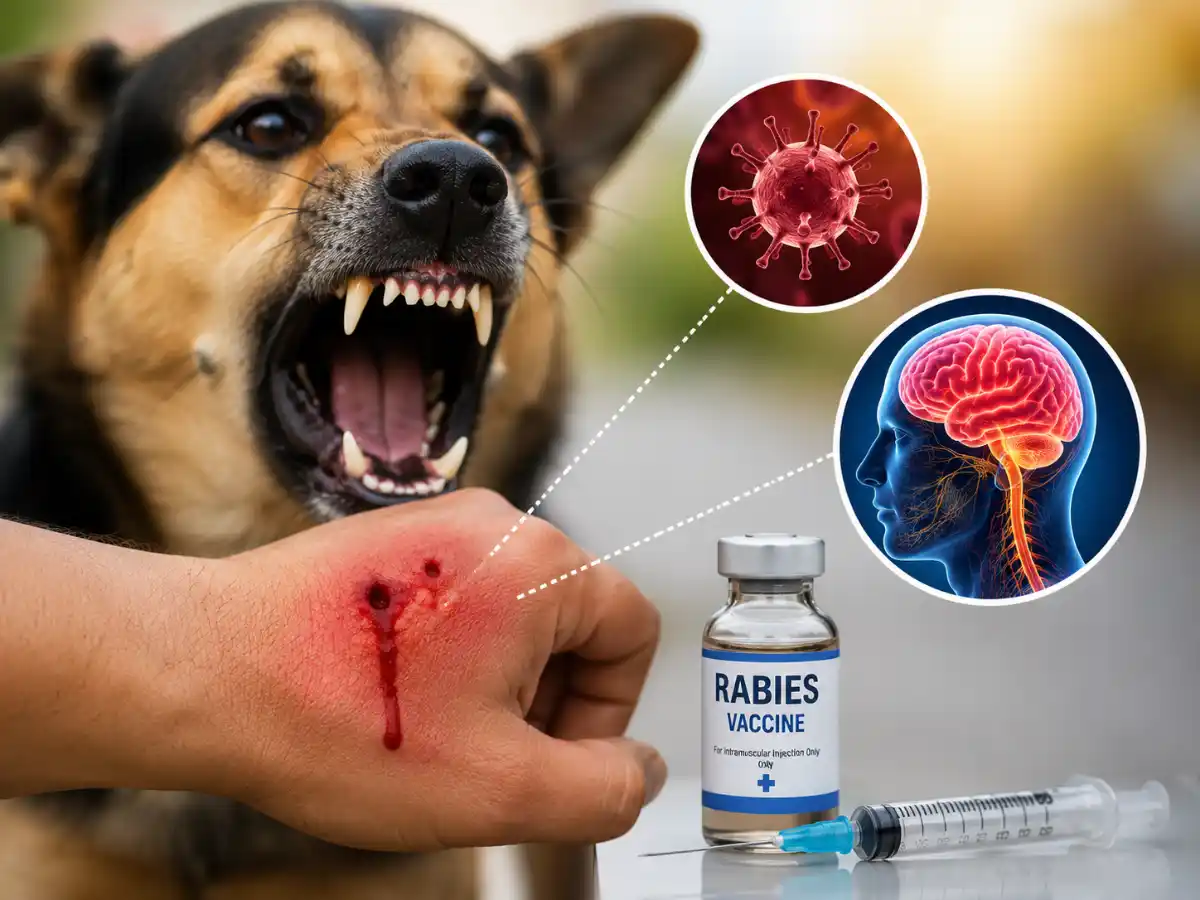
Every year, rabies claims nearly 59,000 lives worldwide—and once symptoms appear, it is almost always fatal. The good news? One simple action immediately after an animal bite can completely prevent this deadly disease if done on time. Here’s what every family should know.
What is Rabies virus
It is a viral disease which affects the central nervous system (brain and spinal cord) of mammals including humans.
It is caused by the rabies virus which is usually transmitted through the bite or scratch of an infected animal.
💡 Did You Know?
- 🦠 Rabies is almost 100% preventable after exposure if prompt wound washing and post-exposure treatment (PEP) are started before symptoms appear.
- 🐕 Nearly 99% of human rabies cases worldwide are caused by bites from infected dogs.
- 🧼 Washing a bite or scratch with soap and running water for at least 15 minutes is one of the most important first-aid steps after a suspected rabies exposure.
- 🧠 Once rabies symptoms begin, the disease is almost always fatal, making early treatment critical.
- 💉 Rabies vaccines are highly effective when given on time and have saved millions of lives worldwide.
How Rabies Spreads Through the Body
After a bite or scratch from an infected animal, the rabies virus does not immediately enter the bloodstream. Instead, it usually travels slowly through the peripheral nerves toward the brain. This is why immediate wound washing and prompt post-exposure treatment (PEP) can stop the infection before symptoms develop.
Emergency Action: What To Do Immediately After an Animal Bite
Do not wait for symptoms. Taking these steps immediately can prevent rabies from developing.
- 🧼 Wash the wound thoroughly with soap and running water for at least 15 minutes.
- 🩹 Apply an antiseptic such as povidone-iodine or iodine solution if available.
- 🏥 Visit the nearest hospital or healthcare provider immediately.
- 💉 Start the recommended Rabies Post-Exposure Prophylaxis (PEP) without delay.
- 🛡️ If your doctor recommends it, receive Rabies Immunoglobulin (RIG) for severe (Category III) exposures.
- ❌ Never wait for symptoms like fever, confusion, or fear of water before seeking treatment.
Rabies is primarily found in wild animals such as bats, raccoons, foxes, and skunks, although domesticated animals like dogs and cats can also contract and transmit the virus.
The virus infects the central nervous system, leading to inflammation of the brain and eventually causing severe neurological symptoms.
The early symptoms of rabies in humans are usually non-specific and may include fever, headache, weakness, and general discomfort.
As the disease progresses more specific symptoms may develop including anxiety, confusion, hallucinations, excessive salivation, difficulty in swallowing and fear of water (known as hydrophobia).
Once symptoms of rabies appear, the disease is almost always fatal. Therefore immediate medical attention is crucial if someone has been bitten by an animal that may carry rabies.
Rabies Symptoms Timeline: How the Disease Progresses
Rabies symptoms may appear days, weeks, or even months after an infected animal bite, depending on factors such as the location of the bite and the amount of virus introduced. Once symptoms begin, the disease is almost always fatal.
(Usually Days to Months)
Difficulty Swallowing
Expert Advice
“Rabies is one of the few diseases that is almost always fatal once symptoms appear. However, it is also one of the most preventable. Immediate wound washing and timely vaccination can save a life after a potentially rabid animal bite.”
— Dr. Shabbir Hussain (BPT)
Licensed Physiotherapist & Clinical Rehabilitation Specialist
Post-exposure prophylaxis which involves a series of vaccines and sometimes administration of rabies immunoglobulin can be effective in preventing the onset of the disease if given promptly after exposure.
Preventing rabies primarily involves vaccination of domestic animals, responsible pet ownership and avoiding contact with wildlife.
Vaccinating pets not only protects them but also helps create a barrier between wildlife rabies and humans.
Rabies is a significant public health concern in many parts of the world especially in regions where canine rabies is endemic.
However it is also a preventable disease through vaccination and prompt medical intervention.
Rabies Myths vs Facts
| ❌ Myth | ✅ Fact |
|---|---|
| Only dog bites cause rabies. | Cats, bats, monkeys, foxes and other infected mammals can also spread rabies. |
| Small scratches are harmless. | Even small scratches contaminated with saliva can transmit the virus. |
| If there is no bleeding, vaccination isn’t needed. | Some scratches or saliva exposures may still require medical evaluation and vaccination. |
| You can wait for symptoms before seeing a doctor. | Once symptoms appear, rabies is almost always fatal. Treatment must begin immediately after exposure. |
| Healthy-looking animals cannot spread rabies. | An infected animal may appear normal during the incubation period. |
Rabies by the Numbers
Rabies remains one of the deadliest infectious diseases in the world, but it is also one of the most preventable when treated promptly.
- Around 59,000 people die from rabies globally every year, with the majority of deaths occurring in Asia and Africa.
- Dogs are responsible for up to 99% of human rabies transmissions, making dog bites the leading source of infection worldwide.
- India carries one of the world’s highest rabies burdens, accounting for an estimated 18,000–20,000 human deaths each year and approximately 36% of global rabies deaths, although the true burden is likely underreported.
- An estimated 17.4 million animal bites (mostly dog bites) occur in India every year, highlighting why immediate wound washing and timely rabies vaccination are critical.
- The World Health Organization (WHO) emphasizes that rabies is virtually 100% fatal once symptoms appear, but it is 100% preventable with prompt wound care and appropriate post-exposure prophylaxis (PEP).
Rabies vaccine
The vaccine stimulates the immune system to produce antibodies against the rabies virus providing protection against infection.
There are two types of rabies vaccines commonly used:
- Pre-exposure prophylaxis (PrEP) vaccine: This vaccine is given to individuals who are at high risk of exposure to rabies, such as laboratory workers, veterinarians, animal handlers and people traveling to regions where rabies is prevalent. It involves a series of three or four injections given over a period of 2-4 weeks. This vaccine builds immunity to rabies and provides a baseline level of protection.
- Post-exposure prophylaxis (PEP) vaccine: This vaccine is administered to individuals who have been potentially exposed to rabies, either through a bite, scratch, or other contact with a potentially infected animal. The PEP vaccine is given in combination with a rabies immunoglobulin (RIG) which provides immediate, temporary protection until the vaccine stimulates the body’s immune response. The PEP vaccine schedule typically involves receiving four or five doses of the vaccine over a period of 14-28 days.
Rabies vaccines are generally safe and well-tolerated. Common side effects may include pain or redness at the injection site, headache, muscle aches, and fatigue.
Serious side effects are rare.
It’s important to note that even with vaccination if someone is bitten or scratched by an animal suspected of carrying rabies, prompt medical attention is still necessary.
The vaccine helps to prevent the disease from developing, but immediate treatment after exposure is crucial to provide additional protection.
Key Takeaway
One bite can be deadly—but one immediate action can save your life.
If you are bitten or scratched by a potentially rabid animal:
- ✅ Wash the wound thoroughly with soap and running water for at least 15 minutes.
- ✅ Apply an antiseptic such as povidone-iodine if available.
- ✅ Visit the nearest hospital or healthcare provider immediately.
- ✅ Start the recommended rabies vaccine (PEP) without delay.
- ✅ If advised by your doctor, receive Rabies Immunoglobulin (RIG) for severe (Category III) exposures.
- ❌ Do not wait for symptoms to appear. Once rabies symptoms develop, the disease is almost always fatal.
📌 Remember These 5 Life-Saving Points
If you remember only one part of this article, make it this. These five simple steps can help prevent rabies after a suspected animal bite or scratch.
Wash the wound with soap and running water for at least 15 minutes.
Seek medical care as soon as possible after any suspected exposure.
Begin Post-Exposure Prophylaxis (PEP) without delay if recommended.
Rabies Immunoglobulin (RIG) may be needed for severe (Category III) exposures.
Once rabies symptoms appear, the disease is almost always fatal.
These five steps can make the difference between prevention and a life-threatening infection.
FAQ
What is the rabies virus?
Rabies virus is a deadly viral infection that attacks the brain and nervous system, usually transmitted through the bite or saliva of an infected animal.
Is rabies always fatal?
Yes. Once rabies symptoms appear, the disease is almost 100% fatal. Survival is possible only if treatment is started before symptoms begin.
How does rabies spread to humans?
Rabies spreads through saliva of infected animals via bites, scratches, or saliva entering open wounds, eyes, mouth, or nose.
What are early symptoms of rabies in humans?
Early symptoms include fever, headache, weakness, tingling at the bite site, anxiety, and confusion.
What is the life-saving treatment for rabies?
Immediate wound washing, rabies immunoglobulin (RIG), and a full course of rabies vaccination can completely prevent the disease if given on time.
Can rabies be cured after symptoms appear?
No. There is no proven cure once clinical symptoms develop.
Medical Disclaimer
The information provided in this article is intended for general educational and informational purposes only and should not be considered a substitute for professional medical advice, diagnosis, or treatment.
Rabies is a medical emergency. If you are bitten, scratched, or exposed to the saliva of a potentially rabid animal, immediately wash the wound with soap and running water for at least 15 minutes and seek urgent medical care. Early treatment with rabies vaccination (PEP) and, when indicated, Rabies Immunoglobulin (RIG) can prevent this otherwise fatal disease.
Never ignore an animal bite or wait for symptoms to develop. Treatment decisions should always be made by a qualified healthcare professional based on the type of exposure, the animal involved, and current medical guidelines.
📚 References
The medical information presented in this article is based on guidance and recommendations from the following trusted health organizations:
- World Health Organization (WHO) – Rabies Fact Sheet
- Centers for Disease Control and Prevention (CDC) – Rabies
- National Centre for Disease Control (NCDC), India
- Ministry of Health & Family Welfare (MoHFW), Government of India

Dr. Shabbir Hussain, BPT
Registered Physiotherapist | Clinical Rehabilitation Specialist
Maharashtra OTPT Council Reg. No.: PR-2021/08/PT/009532
Society of Onco Physiotherapists Reg. No.: SOP/00033/LM
Dr. Shabbir Hussain, BPT, Registered Physiotherapist with over 8 years of experience in physiotherapy, kidney rehabilitation, oncological rehabilitation, and lymphedema management. He specializes in balance disorders, pain management, musculoskeletal rehabilitation, strengthening programs, and VR-based rehabilitation.