
Last Updated: August 5, 2026 | Medically Reviewed by: Dr. Shabbir Hussain (BPT) | Information updated to reflect the latest public health guidance and available evidence.
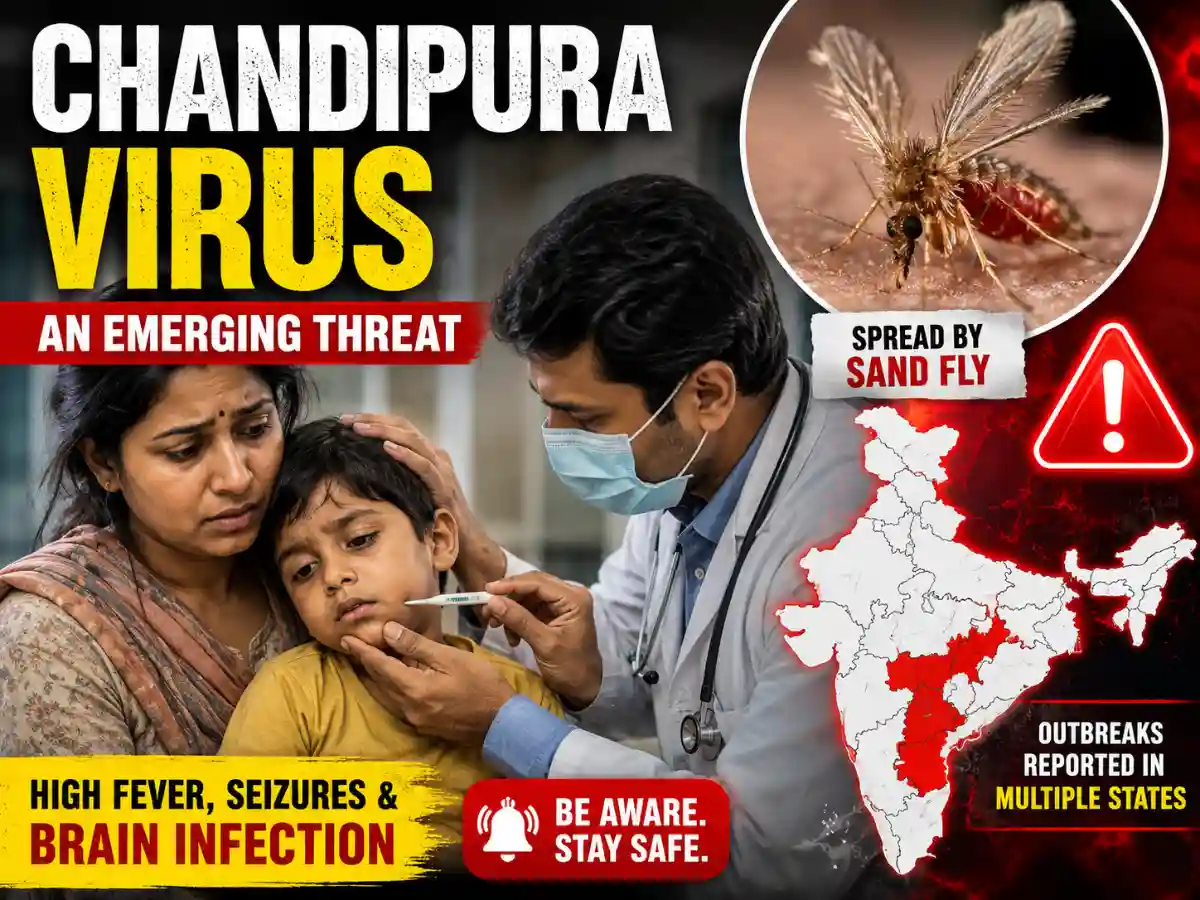
Chandipura virus is a rare but potentially life-threatening virus that mainly affects children and can cause sudden fever and acute encephalitis. Recent outbreaks in India have renewed public health concern due to its high fatality rate among severe cases.
Chandipura Virus was first isolated in 1965 during investigations of patients with acute febrile illness in Chandipura village, Maharashtra, India, by scientists from the National Institute of Virology (NIV), Pune. The virus was named after the village where it was first identified.
CHPV belongs to the family Rhabdoviridae and the genus Vesiculovirus. It is an enveloped, bullet-shaped virus with a single-stranded, negative-sense RNA genome and is genetically related to vesiculoviruses, although it is distinct from the rabies virus.
Since its discovery, Chandipura virus has been recognized as an important cause of outbreaks of acute encephalitis syndrome (AES), particularly among children in parts of India. Continued surveillance and research have improved our understanding of its transmission, diagnosis, and public health impact.
Discovery and Classification
First identified in 1965 in Chandipura village, Maharashtra, India, the Chandipura virus has emerged as an important cause of sporadic outbreaks of acute encephalitis syndrome, particularly among children in India.
Quick Answer
Chandipura virus (CHPV) is a rare but potentially life-threatening virus that mainly affects children. It is primarily spread through the bite of infected sand flies and can cause sudden high fever, vomiting, seizures, and acute encephalitis (brain inflammation). There is no specific antiviral treatment or approved vaccine for Chandipura virus. Early diagnosis, supportive medical care, and preventing sand fly bites are the best ways to reduce the risk of severe illness.
- Virus Family: Rhabdoviridae
- Primary Vector: Female sand fly (Phlebotomus species)
- Incubation Period: Usually 2–3 days
- Main Symptoms: High fever, headache, vomiting, seizures, confusion
- Most At Risk: Children under 15 years of age
- Treatment: Supportive care (no specific antiviral drug)
- Prevention: Avoid sand fly bites, use insect repellents, bed nets, and maintain environmental hygiene
📊 Chandipura Virus at a Glance
| First Identified | 1965, Chandipura village, Maharashtra, India |
| Virus Family | Rhabdoviridae |
| Genus | Vesiculovirus |
| Genome | Single-stranded negative-sense RNA |
| Primary Vector | Female sand fly (Phlebotomus species) |
| Incubation Period | Usually 2–3 days |
| Most Affected Group | Children below 15 years of age |
| Common Symptoms | High fever, vomiting, headache, seizures, altered consciousness |
| Specific Antiviral Treatment | Not available |
| Approved Vaccine | Currently unavailable |
| Best Prevention | Avoid sand fly bites, use insect repellents, bed nets, protective clothing, and environmental vector control |
Genetic Characteristics
CHPV is an enveloped, bullet-shaped virus with a single-stranded, negative-sense RNA genome.
Understanding the genetic makeup of CHPV has been crucial for developing diagnostic tools and potential therapeutic strategies.
Transmission and Vector
The primary vector for CHPV transmission is believe to be the female sand fly, particularly species belonging to the genus Phlebotomus.
These tiny insects, measuring only 2-3 mm in length, are prevalent in tropical and subtropical regions.
The virus replicates within the sand fly and is transmit to humans through their bite.
Recent studies have also suggested the possibility of human-to-human transmission, particularly in hospital settings.
However, this mode of transmission requires further investigation to be conclusively established.
Epidemiology (Chandipura Virus: An Emerging Threat in Tropical Regions)
Since its discovery, CHPV has been reported in several Indian states, including Maharashtra, Gujarat, Andhra Pradesh, and Madhya Pradesh.
Outbreaks have occurred sporadically, with some resulting in significant mortality rates, especially among children.
The virus has also been detected in other countries, such as Sri Lanka, Nigeria, and Senegal, indicating its potential for wider geographical spread.
However, the most severe outbreaks have been concentrated in central India.
🚨 Common Symptoms of Chandipura Virus
Chandipura virus infection usually begins suddenly after an incubation period of about 2–3 days. Seek medical attention immediately if neurological symptoms develop.
- ✅ High fever
- ✅ Severe headache
- ✅ Repeated vomiting
- ✅ Muscle pain (myalgia)
- ✅ Excessive drowsiness or lethargy
- ✅ Altered consciousness or confusion
- ✅ Convulsions (fits)
- ✅ Seizures
- ✅ Difficulty speaking or responding
- ✅ Loss of consciousness or coma (in severe cases)
⚠️ Emergency Warning: If a child develops high fever with seizures, persistent vomiting, confusion, or becomes unusually sleepy or unconscious, seek emergency medical care immediately.
Clinical Manifestations
CHPV infection can lead to a range of symptoms, from mild febrile illness to severe encephalitis.
The incubation period is typically short, ranging from 2 to 3 days. Common symptoms include:
- Sudden onset of high fever
- Severe headache
- Muscle pain
- Vomiting
- Altered consciousness
In severe cases, the infection can progress rapidly, leading to encephalitis, seizures, and coma.
The mortality rate in symptomatic cases can be high, especially in children under 15 years of age.
How is Chandipura Virus Diagnosed?
Diagnosing CHPV infection can be challenging due to the similarity of its symptoms with other viral infections.
However, several methods are employe for accurate diagnosis:
- Virus Isolation: The virus can be isolate from blood or cerebrospinal fluid samples during the acute phase of the illness.
- Serological Tests: Detection of CHPV-specific antibodies using enzyme-linked immunosorbent assay (ELISA) or neutralization tests.
- Molecular Techniques: Reverse transcription-polymerase chain reaction (RT-PCR) is use to detect viral RNA in clinical samples.
- Immunofluorescence: This method can be use to detect viral antigens in infected cells.
Early and accurate diagnosis is crucial for proper patient management and preventing the spread of the virus.
📋 Chandipura Virus: Quick Comparison Table
A quick overview of the most important facts about Chandipura virus (CHPV).
| Feature | Chandipura Virus (CHPV) |
|---|---|
| 🦠 Virus Family | Rhabdoviridae |
| 🧬 Genome | Single-stranded negative-sense RNA |
| 🦟 Primary Vector | Female sand fly (Phlebotomus species) |
| ⏳ Incubation Period | Usually 2–3 days |
| 👶 Main Risk Group | Children under 15 years of age |
| 🤒 Common Symptoms | High fever, headache, vomiting, seizures, altered consciousness |
| 🧪 Diagnosis | RT-PCR, ELISA, virus isolation, immunofluorescence |
| 💊 Specific Antiviral Treatment | Not currently available |
| 💉 Approved Vaccine | None approved at present |
| 🏥 Standard Treatment | Supportive medical care, hydration, fever control, seizure management, intensive care when needed |
| 🛡️ Best Prevention | Prevent sand fly bites using repellents, bed nets, protective clothing, and vector control measures |
Is There Any Treatment for Chandipura Virus?
Currently, there is no specific antiviral treatment available for CHPV infection.
Management of the disease is primarily supportive, focusing on alleviating symptoms and preventing complications.
Treatment approaches include:
- Fluid management to prevent dehydration
- Antipyretics to control fever
- Anticonvulsants for seizure management
- Mechanical ventilation in severe cases with respiratory failure
In some cases, intravenous immunoglobulin (IVIG) has been used, although its efficacy in CHPV infection requires further study.
Prevention and Control
Preventing CHPV infection primarily involves vector control measures and personal protection against sand fly bites.
Some key strategies include:
- Use of insecticide-treated bed nets
- Indoor residual spraying with insecticides
- Wearing protective clothing
- Using insect repellents
- Improving sanitation and reducing breeding sites for sand flies
Public health education plays a crucial role in raising awareness about the virus and promoting preventive measures in endemic areas.
Research and Future Directions
The emergence of CHPV as a significant public health threat has spurred increased research efforts.
Current areas of focus include:
- Vaccine Development: Researchers are exploring potential vaccine candidates, including DNA vaccines and attenuated virus strains.
- Antiviral Therapies: Studies are underway to identify effective antiviral compounds that can target CHPV specifically.
- Vector Biology: Understanding the life cycle and behavior of sand flies is crucial for developing more effective vector control strategies.
- Pathogenesis Studies: Investigating the mechanisms by which CHPV causes disease could lead to new therapeutic approaches.
- Surveillance and Epidemiology: Improving surveillance systems to detect and respond to CHPV outbreaks more efficiently.
Conclusion (Chandipura Virus: An Emerging Threat in Tropical Regions)
The Chandipura virus represents an emerging threat to public health, particularly in tropical regions.
While it remains relatively unknown compared to other viral pathogens, its potential for causing severe disease and its ability to spread make it a concern for health authorities.
As research continues, it is crucial to maintain vigilance, improve diagnostic capabilities, and develop effective prevention and treatment strategies.
Understanding CHPV and its impact on human health is not just a matter of scientific curiosity but a necessary step in safeguarding communities against this potentially deadly virus.
As climate change and globalization continue to influence the spread of vector-borne diseases, the importance of studying and preparing for pathogens like CHPV cannot be overstated.
By combining ongoing research efforts with public health initiatives and community engagement, we can hope to mitigate the impact of CHPV and be better prepare for future outbreaks.
The story of the Chandipura virus serves as a reminder of the ever-present challenge of emerging infectious diseases and the need for continued investment in global health security.
Although Chandipura virus remains uncommon, early recognition and prompt medical treatment can save lives. Parents and caregivers should seek immediate medical attention if a child develops high fever, repeated vomiting, seizures, confusion, or unusual drowsiness, especially in areas where outbreaks have been reported. Preventing sand fly bites remains the most effective way to reduce the risk of infection.
📌 Key Takeaways
Essential facts to remember about Chandipura virus (CHPV).
Chandipura virus is an uncommon but potentially life-threatening viral infection that can rapidly progress to acute encephalitis.
Severe illness has been reported most frequently in children, particularly those under 15 years of age.
The virus is primarily associated with transmission through the bite of infected female sand flies (Phlebotomus species).
There is currently no approved vaccine or specific antiviral treatment for Chandipura virus infection.
Prompt diagnosis and supportive hospital care can improve outcomes, especially when neurological symptoms develop.
Reduce your risk by preventing sand fly bites with insect repellents, bed nets, protective clothing, and environmental vector control.
References
- World Health Organization (WHO) . Information on vector-borne diseases, acute encephalitis syndrome, and outbreak preparedness.
- Indian Council of Medical Research (ICMR) . National guidance on infectious disease surveillance and research in India.
- ICMR – National Institute of Virology (NIV), Pune . Chandipura virus research, virology, outbreak investigations, and surveillance.
- Balachandran C, Chavan SP, Bondre VP, et al. Investigations Into the Outbreak of Chandipura Virus Encephalitis, Gujarat, India, 2024. Journal of Medical Virology. 2025. PMID: 40556437. PubMed.
- PubMed (U.S. National Library of Medicine) . Peer-reviewed scientific literature on Chandipura virus, encephalitis, diagnosis, and treatment.
- NCBI Taxonomy Database . Chandipura virus taxonomy and classification.
Editorial Note: This article has been medically reviewed and updated using information from internationally recognized public health organizations and peer-reviewed scientific publications. Recommendations may change as new evidence becomes available.
Frequently Asked Questions About Chandipura Virus
Quick answers to common questions about Chandipura virus (CHPV), its symptoms, transmission, diagnosis, treatment and prevention.
1. What causes Chandipura virus infection?
Chandipura virus infection is caused by Chandipura virus (CHPV), an enveloped, negative-sense RNA virus belonging to the Rhabdoviridae family and Vesiculovirus genus. The virus can cause acute febrile illness and, in severe cases, acute encephalitis.
2. How does Chandipura virus spread?
Chandipura virus is considered a vector-borne infection. Sand flies, particularly Phlebotomus species, are recognized as important vectors. Infection can occur when an infected vector bites a person. Research continues into the virus’s transmission cycle and other possible vectors.
3. Is Chandipura virus contagious from person to person?
Chandipura virus is not generally considered to spread routinely from person to person. Vector-borne transmission is the primary concern. Evidence for sustained human-to-human transmission has not been established, so claims that CHPV commonly spreads directly between people should be avoided.
4. Can adults get Chandipura virus?
Yes. Adults can become infected, but reported outbreaks of severe Chandipura virus disease have predominantly affected children, particularly those younger than 15 years. Parents and caregivers in affected areas should be especially alert to sudden fever accompanied by neurological symptoms in children.
5. What are the symptoms of Chandipura virus?
Symptoms may include sudden high fever, severe headache, vomiting, drowsiness, confusion, altered consciousness and seizures. Severe infection can progress rapidly to encephalitis, coma and other life-threatening complications.
6. How dangerous is Chandipura virus?
Chandipura virus infection can be very serious when it causes acute encephalitis. Severe illness may progress rapidly, particularly in children. Prompt recognition and hospital-based supportive treatment are therefore important when neurological symptoms such as seizures, confusion or loss of consciousness occur.
7. Is there a vaccine for Chandipura virus?
There is currently no approved vaccine specifically for Chandipura virus infection. Vaccine candidates have been investigated experimentally, but prevention currently depends primarily on vector control, reducing exposure to sand flies and following public health recommendations.
8. How is Chandipura virus diagnosed?
Diagnosis requires specialized laboratory testing. Depending on the stage of illness and available facilities, testing may include RT-PCR for viral RNA, virus isolation, serological testing and other virological methods. Testing should be interpreted by qualified healthcare and laboratory professionals.
9. How can Chandipura virus infection be prevented?
Prevention focuses on reducing exposure to disease-carrying vectors. Measures include using insect repellents, insecticide-treated bed nets, protective clothing and appropriate vector-control measures. Keeping living areas clean and following local public health advisories may also help reduce exposure.
10. When should I go to the hospital?
Seek urgent medical attention if a child or adult develops high fever together with seizures, repeated vomiting, unusual drowsiness, confusion, altered consciousness, difficulty responding or loss of consciousness. Neurological symptoms accompanying fever should not be managed solely at home.
✔ Medical Review & Trust Information
- 👨⚕️ Reviewed by: Dr. Shabbir Hussain (BPT)
- ✔ Medically Reviewed
- 📚 Evidence-Based Content
- 🗓️ Last Updated: August 5, 2026
- 🔍 Primary Sources: WHO, ICMR, National Institute of Virology (NIV), PubMed, peer-reviewed medical literature
Editorial Note: This article has been medically reviewed for accuracy and is based on the latest available scientific evidence and public health guidance. It is intended for educational purposes only and should not replace professional medical advice, diagnosis, or treatment.

Dr. Shabbir Hussain, BPT Licensed Physiotherapist | Clinical Rehabilitation SpecialistMaharashtra OTPT Council Reg. No. PR-2021/08/PT/009532Society of Onco Physiotherapists Reg. No. SOP/00033/LM
He is a licensed physiotherapist with over 8 years of experience in physiotherapy, kidney rehabilitation, oncological rehabilitation, and lymphedema management. He specializes in balance disorders, pain management, musculoskeletal rehabilitation, strengthening programs, and VR-based rehabilitation.
Dr. Shabbir Hussain (BPT)