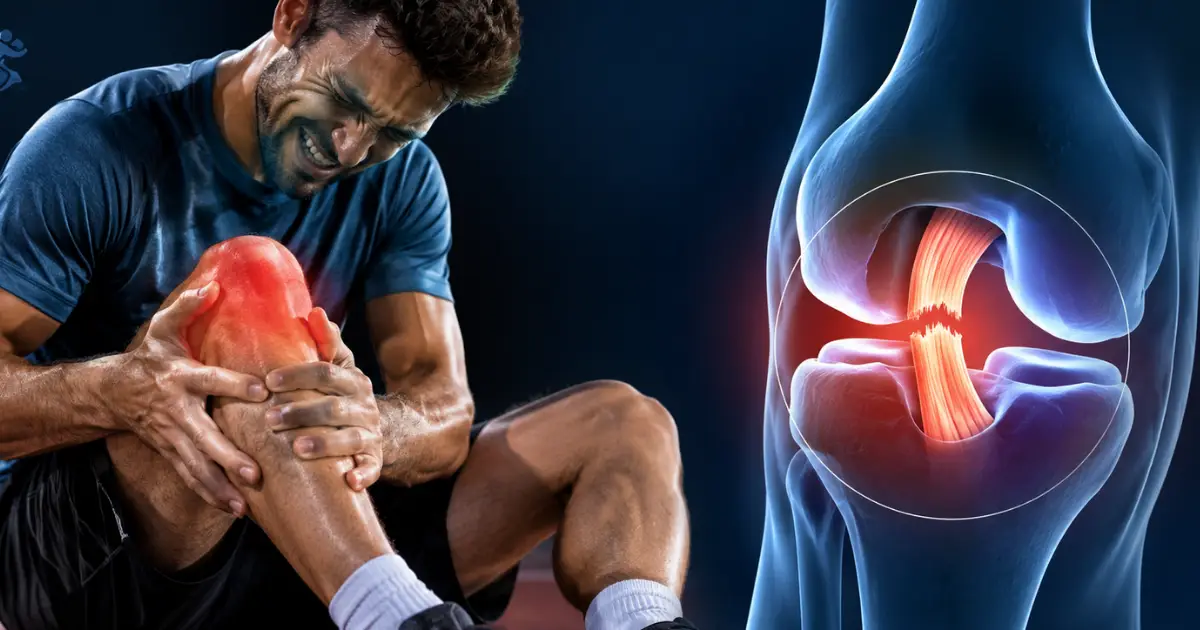
“Did you hear a sudden ‘pop’ in your knee during sports or gym training? It could be an ACL tear — one of the most serious knee injuries athletes face.”
Anterior Cruciate Ligament (ACL) injuries are prevalent among athletes and individuals engaged in physically demanding activities.
These injuries not only affect one’s physical health but also impact their overall quality of life.
In this article, we will explain the causes, symptoms, and various treatment modalities for ACL injuries.
With a particular focus on physiotherapy as an integral part of the recovery process.
An ACL injury occurs when the anterior cruciate ligament in the knee tears due to sudden twisting, landing, or sports trauma. Common symptoms include a popping sound, swelling, knee instability, and pain while walking.
Causes of ACL Tear :
ACL injuries often occur during sports activities that involve sudden stops, changes in direction, or direct impact to the knee.
acl injury causes:
Sports Injuries: High-impact sports such as football, basketball, soccer, and skiing pose a significant risk for ACL tears due to the sudden movements and pivoting involved.
Direct Trauma: Accidents, falls, or collisions that exert excessive force on the knee joint can lead to ACL injuries.
Improper Landing Techniques: Incorrect landing from a jump, especially with poor technique or inadequate muscle control, increases the risk of ACL tears.
Overuse: Repetitive stress on the knee joint, particularly without proper rest or recovery, can weaken the ACL over time, making it more susceptible to injury.
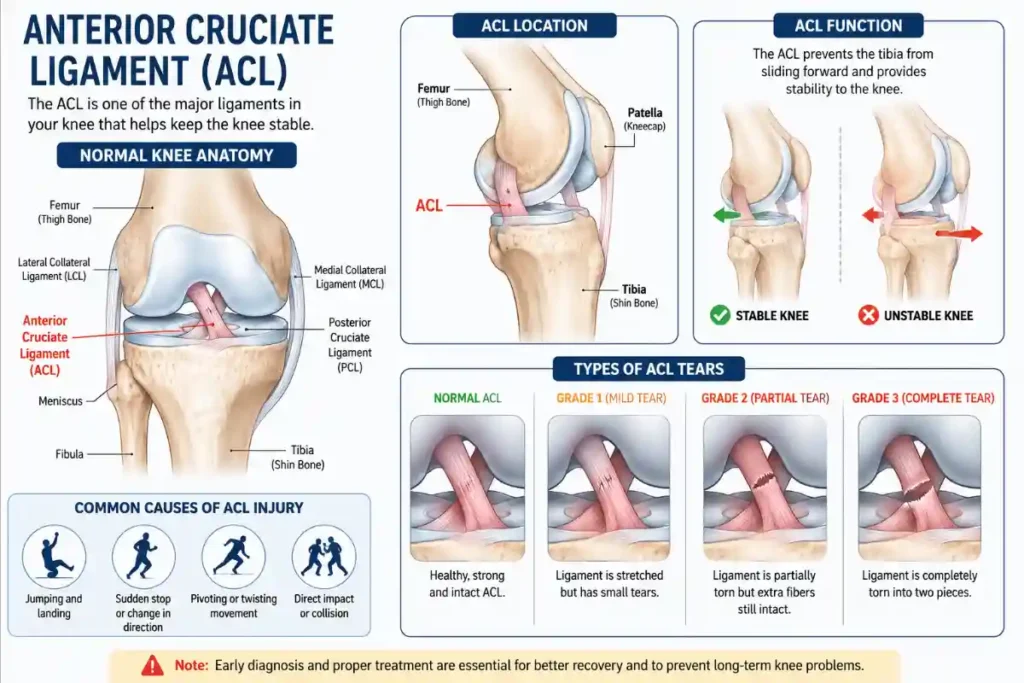
Educational ACL tear anatomy diagram
Warning Signs of an ACL Tear
Popping sound in the knee
Rapid swelling
Knee instability
Pain while walking
Difficulty changing direction
Symptoms :
Recognizing the symptoms of an ACL injury is crucial for prompt diagnosis and treatment.
symptoms of acl injury include:
Pain and Swelling: Immediate pain and swelling in the knee joint are typical after an ACL injury.
Instability: A feeling of the knee giving out or buckling, especially during weight-bearing activities, indicates instability, which is a hallmark symptom of ACL tears.
Limited Range of Motion: Difficulty bending or straightening the knee fully due to pain and stiffness.
Audible Popping Sound: Some individuals report hearing a popping or snapping sound at the time of injury, indicating the rupture of the ACL.
Treatment Options for ACL Injuries:
The acl injury treatments typically involves both conservative and surgical approaches, depending on the severity of the injury and the individual’s activity level. Treatment options include:
Conservative Management:
RICE Protocol: Rest, Ice, Compression, and Elevation help reduce pain and swelling in the acute phase of injury.
Physical Therapy: A structured rehabilitation program focusing on strengthening the muscles around the knee joint, improving flexibility, and restoring functional mobility.
Bracing: Using knee braces or supportive devices to stabilize the knee and prevent further injury, especially during physical activities.
Surgical Intervention:
ACL Reconstruction Surgery: A surgical procedure to repair the torn ACL using either autografts (tissues from the patient’s body) or allografts (donor tissues).
Arthroscopic Surgery: Minimally invasive surgery performed through small incisions, allowing for faster recovery and less post-operative pain.
A qualified physiotherapist designs a tailored treatment plan based on the individual’s specific needs and goals.
Here’s an overview of physiotherapy interventions for ACL injuries:
Early Rehabilitation:
Pain Management: Using modalities such as ice packs, electrical stimulation, or ultrasound to alleviate pain and inflammation.
Range of Motion Exercises: Gentle movements to improve flexibility and prevent stiffness in the knee joint.
Weight Bearing Progression: Gradually reintroducing weight-bearing activities under supervision to regain confidence and stability.
Strength and Stability Training:
Quadriceps Strengthening: Targeting the muscles around the knee, particularly the quadriceps, to enhance joint stability and support.
Hamstring Strengthening: Strengthening the hamstring muscles helps balance the forces acting on the knee joint, reducing the risk of re-injury.
Proprioceptive Training: Exercises focusing on balance, coordination, and proprioception to improve joint awareness and prevent recurrent injuries.
Functional Rehabilitation:
Sport-Specific Training: Simulating the movements and demands of the individual’s sport or activity to facilitate a safe return to play.
Plyometric Exercises: Incorporating jumping, hopping, and agility drills to enhance neuromuscular control and dynamic stability.
Running and Cutting Mechanics: Correcting biomechanical deficiencies in running and cutting movements to reduce strain on the ACL and prevent future injuries.
Education and Injury Prevention:
Providing guidance on proper warm-up techniques, footwear selection, and equipment use to minimize the risk of ACL injuries.
Educating athletes and individuals on the importance of adhering to rehabilitation protocols, avoiding overtraining, and listening to their bodies’ signals.
Before and after ACL reconstruction surgery infographic
ACL injuries can be debilitating, but with prompt diagnosis and comprehensive treatment, individuals can achieve successful outcomes and return to their desired level of activity.
Physiotherapy plays a vital role in the rehabilitation process, offering personalized care and support to facilitate optimal recovery and prevent future injuries.
By understanding the causes, recognizing the symptoms, and embracing a multidisciplinary approach to treatment.
Individuals can overcome ACL injuries and pursue a healthy, active lifestyle.
Dr. Shabbir Hussain, BPT Licensed Physiotherapist | Clinical Rehabilitation SpecialistMaharashtra OTPT Council Reg. No. PR-2021/08/PT/009532Society of Onco Physiotherapists Reg. No. SOP/00033/LM
He is a licensed physiotherapist with over 8 years of experience in physiotherapy, kidney rehabilitation, oncological rehabilitation, and lymphedema management. He specializes in balance disorders, pain management, musculoskeletal rehabilitation, strengthening programs, and VR-based rehabilitation. Dr. Shabbir Hussain (BPT)