
Written by Dr. Shabbir Hussain, BPT, Registered Physiotherapist | Clinical Rehabilitation Specialist
QUICK ANSWER
A sciatica symptom checker can help you identify whether your symptoms resemble sciatic nerve pain, but it cannot confirm a diagnosis. Pain travelling from the lower back or buttock down one leg, particularly with tingling, numbness, or weakness, may suggest sciatica. A healthcare professional can assess the cause and rule out other conditions.
What Do Your Symptoms Mean?
Pain that travels from your lower back into your buttock or leg can make sitting, walking, and sleeping uncomfortable. But is it sciatica, a muscle problem, or another condition?
This sciatica symptom checker helps you recognize common symptom patterns and understand when to seek medical attention. It is an educational guide, not a validated diagnostic test.
Sciatica Symptom Checker
Select the symptoms that apply to you to receive general guidance about possible sciatica symptoms and appropriate next steps.
Free self-assessment · Instant guidance · No login required
Select your symptoms and click Check My Symptoms.
Medical disclaimer: This educational tool is not a validated diagnostic test. It cannot confirm or exclude sciatica or other serious conditions.
What are the early warning signs of sciatica?
Common symptoms include:
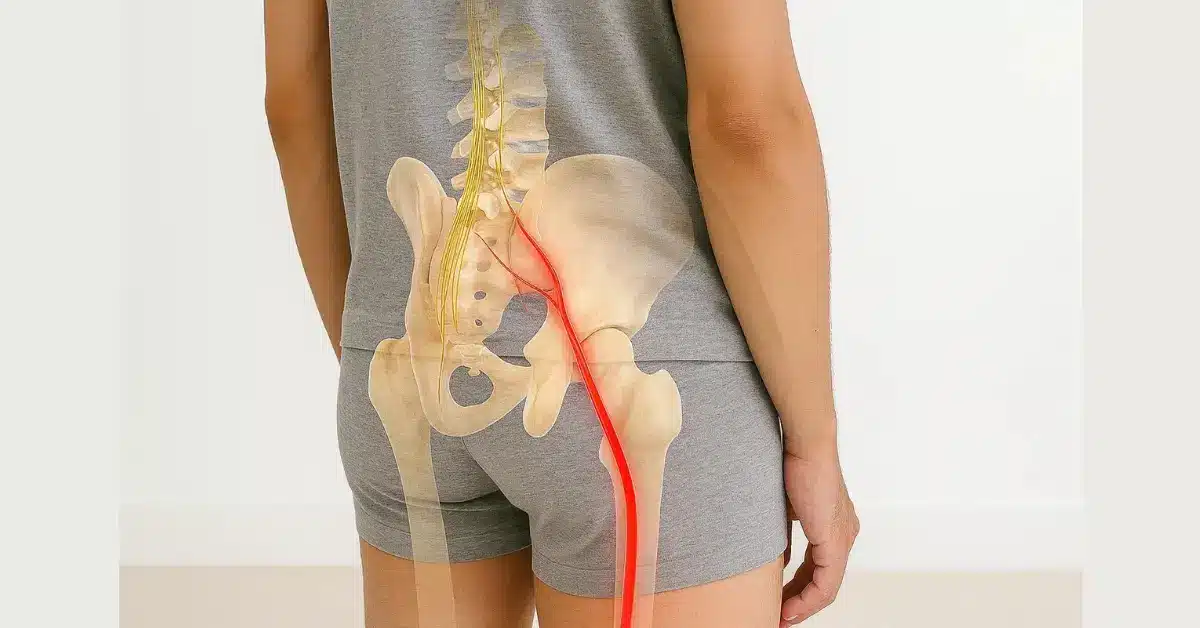
- Radiating pain: Pain that travels from the lower back or buttock down one leg.
- Tingling: A pins-and-needles sensation in the leg or foot.
- Numbness: Reduced sensation in part of the leg or foot.
- Burning or electric-shock pain: Discomfort that may worsen with coughing, sneezing, or certain movements.
- Muscle weakness: Difficulty lifting the foot or moving the affected leg normally.
Sciatica usually affects one leg, although symptoms can occasionally affect both.
How can I confirm if I have sciatica?
You cannot confirm sciatica from symptoms alone. A clinician will review your medical history and examine your walking pattern, muscle strength, sensation, reflexes, and relevant movements.
A straight-leg raise test may help identify nerve irritation. MRI or other investigations are sometimes appropriate when symptoms are severe, persistent, worsening, or suggest a more serious problem.
How can I test for sciatica at home?
You can observe whether your pain follows a typical pattern, such as travelling from your buttock down the back of your leg. Note any tingling, numbness, weakness, and activities that worsen your symptoms.
Do not force your leg upward or repeatedly perform nerve-stretching tests to provoke pain. Home observations cannot reliably distinguish sciatica from other causes of back and leg pain.
Is sciatica 100% curable?
No treatment can guarantee a 100% cure in every case. Many people improve over several weeks, but recovery depends on the underlying cause, symptom severity, and whether nerve dysfunction is present. Some people experience recurring or persistent symptoms.
Physiotherapy Treatment for Sciatica: Exercises and Recovery
Physiotherapy may help reduce disability, restore movement, and improve tolerance for daily activities. Depending on the assessment, treatment may include:
- Gradual walking and other tolerable physical activities.
- Individualized strengthening and mobility exercises.
- Education about lifting, sitting, and activity modification.
- A progressive home exercise programme.
Exercises such as bridging or gentle back mobility movements may suit some people, but no single exercise is appropriate for everyone. Stop any movement that substantially worsens leg pain, numbness, or weakness.
When should you seek urgent medical care?
Seek emergency assessment if you develop new difficulty controlling your bladder or bowel, difficulty passing urine, numbness around the genitals or anus, or severe or rapidly worsening weakness in your legs. These can indicate a serious spinal nerve problem.
Arrange a clinical assessment if pain persists, worsens, repeatedly returns, or interferes with walking and normal activities.
Key takeaway: Use a sciatica symptom checker to understand your symptoms, not to diagnose yourself. The location of your pain, neurological symptoms, and clinical examination matter more than any online score.
MEDICAL SOURCES
1. NHS — Sciatica: Symptoms, emergency warning signs, and treatment options.
2. Mayo Clinic — Sciatica: Symptoms and Causes: Typical pain patterns, nerve symptoms, and risk factors.
3. Mayo Clinic — Sciatica: Diagnosis and Treatment: Clinical examination, investigations, and treatment options.
4. NICE — Low Back Pain and Sciatica in Over 16s: Clinical recommendations on assessment, exercise, and management.
MEDICAL DISCLAIMER
This article is for general educational and informational purposes only. It is not a substitute for professional medical diagnosis, treatment, or individualized medical advice. If you have persistent, severe, worsening, or concerning symptoms, consult a qualified healthcare professional. Seek urgent medical care for emergency symptoms.

Dr. Shabbir Hussain, BPT
Registered Physiotherapist | Clinical Rehabilitation Specialist
Maharashtra OTPT Council Reg. No.: PR-2021/08/PT/009532
Society of Onco Physiotherapists Reg. No.: SOP/00033/LM
Dr. Shabbir Hussain, BPT, Registered Physiotherapist with over 8 years of experience in physiotherapy, kidney rehabilitation, oncological rehabilitation, and lymphedema management. He specializes in balance disorders, pain management, musculoskeletal rehabilitation, strengthening programs, and VR-based rehabilitation.