Updated September 8, 2026
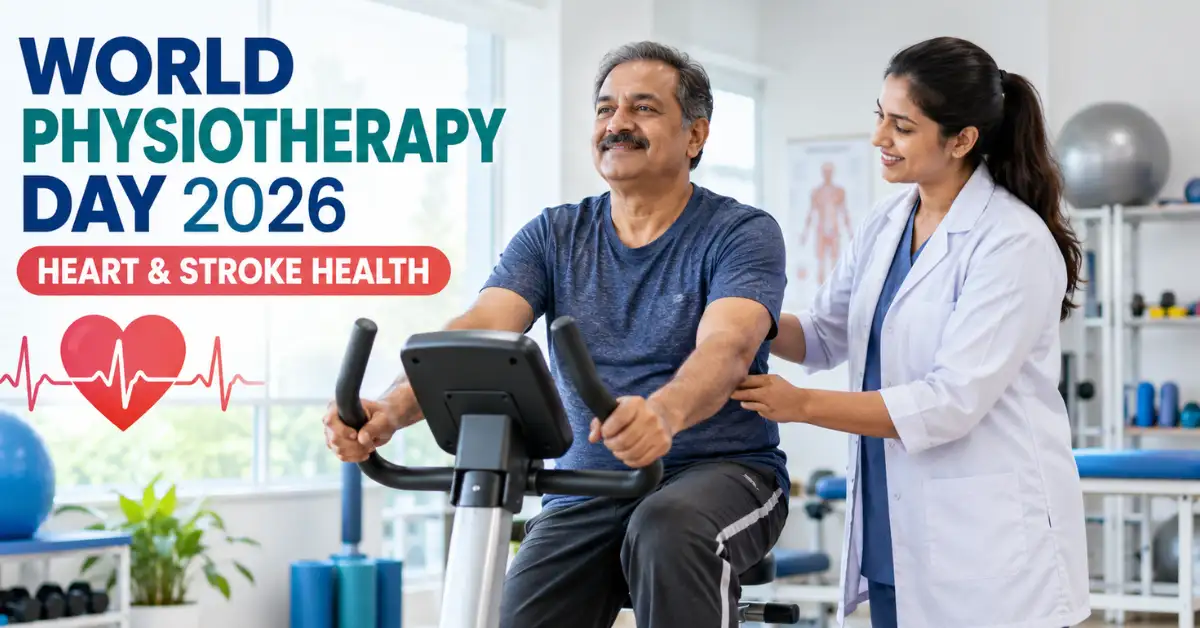
World Physiotherapy Day 2026: Every year on September 8, physiotherapists around the world mark World Physiotherapy Day. In 2026, the focus is especially relevant to a problem that affects millions of people: cardiovascular disease and stroke.
It is also an opportunity to remind people that physiotherapy can play a vital role in prevention, recovery, mobility and long-term health—not only when someone has back pain or a sports injury.
In 2026, that message has a particularly important focus: cardiovascular disease and stroke.
World Physiotherapy’s 2026 campaign highlights the important role of physiotherapy and physical activity in the prevention, management and rehabilitation of cardiovascular disease and stroke.
World Physiotherapy says the organisation is beginning a four-year World PT Day focus on noncommunicable diseases. The 2026 focus is cardiovascular disease and stroke, with later years covering cancer, diabetes and COPD/respiratory disease.
World Physiotherapy Day 2026: Quick Answer
September 8 was chosen because the international organisation now known as World Physiotherapy was founded on September 8, 1951. The date was officially designated as World PT Day in 1996.
World Physiotherapy Day 2026 theme focuses on:
- Cardiovascular disease
- Stroke prevention
- Physical activity
- Exercise and cardiovascular health
- Rehabilitation after stroke
- Helping people remain active and independent
The campaign also encourages greater recognition of the role physiotherapists can play alongside other healthcare professionals.
What is the theme of World Physiotherapy Day 2026?
The 2026 campaign focuses on the role of physiotherapy and physical activity in the prevention, management and rehabilitation of cardiovascular disease and stroke.
This is an important shift in how many people think about physiotherapy.
Physiotherapy is often associated with back pain, knee problems, fractures, cancer rehab or sports injuries. Those remain important areas of practice, but the profession also works across prevention, exercise, rehabilitation and long-term management of health conditions.
For people living with cardiovascular disease, appropriately prescribed physical activity can help improve fitness and make everyday activities easier. Physiotherapists can assess movement and exercise capacity, develop personalised programmes and help people become more physically active within appropriate clinical limits.
After a stroke, rehabilitation can address problems such as mobility, balance, strength and functional independence. World Physiotherapy notes that exercise-based physiotherapy can contribute to improvements in physical function, mobility, balance and quality of life during stroke recovery.
Why is World Physiotherapy Day celebrated on September 8?
The date has a direct connection to the history of the international profession.
World Physiotherapy was founded on September 8, 1951. In 1996, September 8 was designated as World PT Day. The day now provides an opportunity to recognise physiotherapists and highlight the contribution of physiotherapy to individuals and communities around the world.
It is also a day for professional organisations and physiotherapists to raise awareness about areas where rehabilitation and physical activity can improve health and independence.
A Four-Year Focus on Noncommunicable Diseases
The 2026 campaign is also the beginning of a four-year World PT Day focus on noncommunicable diseases. Cardiovascular disease and stroke are the focus for 2026, while subsequent campaigns will address other major noncommunicable diseases, including cancer, diabetes and COPD/respiratory disease.
Physiotherapy Is About More Than Pain Relief
A common misconception is that physiotherapy is simply a treatment for painful joints and muscles.
In reality, physiotherapists work with people across different stages of life and in areas including prevention, treatment, rehabilitation and health promotion. World Physiotherapy describes the profession as helping people develop, maintain and restore movement and functional ability.
Depending on the person’s condition, physiotherapy may involve:
- Exercise and physical-activity programmes
- Strength and mobility training
- Balance and coordination exercises
- Functional rehabilitation
- Education and self-management strategies
- Recovery after injury, illness or surgery
- Rehabilitation following neurological conditions such as stroke
The exact scope of practice and professional regulations vary between countries.
The Connection Between Physiotherapy and Heart Health
The connection may not be obvious at first.
Regular physical activity is an important part of cardiovascular health, while physical inactivity is one of several modifiable factors associated with cardiovascular disease.
The 2026 World PT Day campaign says physiotherapists can help people identify relevant risk factors, become more physically active and follow safe, personalised exercise programmes. For people who already have cardiovascular disease, physiotherapists can also support fitness, activity and self-management as part of a wider healthcare plan.
That does not mean everyone with heart disease should start exercising independently.
People with cardiovascular disease, symptoms during exercise or significant medical conditions should seek appropriate medical advice before starting or changing an exercise programme.
Physiotherapy and Stroke Recovery
Stroke recovery does not end when a person leaves the hospital.
Some people may continue to experience weakness, difficulty walking, poor balance, reduced coordination or problems performing everyday activities.
Physiotherapy can become an important part of the rehabilitation process. Treatment is individualised and may focus on movement, strength, balance, walking and functional activities.
The aim is not simply to make a person “stronger.” It is to help them regain as much safe, useful function and independence as possible.
World Physiotherapy’s 2026 campaign specifically highlights exercise-based physiotherapy across different stages of stroke recovery, from hospital care to longer-term community rehabilitation.
Is a BPT physiotherapist a doctor?
The Government of India’s National Physiotherapy Curriculum Handbook describes the entry-level qualification as Bachelor of Physiotherapy and discusses physiotherapists as healthcare professionals.
A physiotherapist and an MBBS physician are different healthcare professions with different education, roles and scopes of practice.
In India, the Ministry of Health and Family Welfare’s physiotherapy handbook describes physiotherapists as professionals who assess and manage movement and functional problems and notes that physiotherapy education prepares graduates for independent practice.
Whether a physiotherapist can use a particular professional title depends on the applicable rules and regulations. It is therefore better not to assume that a BPT qualification is equivalent to an MBBS medical degree.
How can you wish someone on World Physiotherapy Day?
A simple message can be:
“Happy World Physiotherapy Day! Today we recognise the physiotherapists who help people move better, recover function and live more independently.”
What should people remember from World Physiotherapy Day 2026?
The central message is simple: movement matters throughout life.
Physiotherapy is not limited to treating pain after an injury. It can also contribute to prevention, rehabilitation, physical activity and functional independence.
This year’s focus on cardiovascular disease and stroke is a reminder that rehabilitation and exercise belong in the broader conversation about long-term health.
The safest exercise is not necessarily the most intense exercise. For someone with cardiovascular disease, stroke or another medical condition, activity should be appropriate to their condition and progressed when it is safe to do so.
That is where individual assessment matters.
Medical Disclaimer
This article is for general educational purposes only and does not replace individual medical assessment, diagnosis or treatment. People with cardiovascular disease, stroke, significant medical conditions or symptoms during exercise should seek appropriate medical advice before starting or changing an exercise or rehabilitation programme.
Sources
- World Physiotherapy — World PT Day
- World Physiotherapy — 2026 campaign materials
- World Physiotherapy — What is physiotherapy?
- Ministry of Health & Family Welfare, Government of India
Dr. Shabbir Hussain, BPT Licensed Physiotherapist | Clinical Rehabilitation SpecialistMaharashtra OTPT Council Reg. No. PR-2021/08/PT/009532Society of Onco Physiotherapists Reg. No. SOP/00033/LM
He is a licensed physiotherapist with over 8 years of experience in physiotherapy, kidney rehabilitation, oncological rehabilitation, and lymphedema management. He specializes in balance disorders, pain management, musculoskeletal rehabilitation, strengthening programs, and VR-based rehabilitation.
Dr. Shabbir Hussain (BPT)