
Reviewed By Medical Expert
Dr. SHABBIR HUSSAIN (BPT)
Senior Physiotherapist & Rehabilitation Expert
🕒 Last Updated: May 28, 2026
This article has been medically reviewed for accuracy, rehabilitation relevance, and public health awareness. The content is based on physiotherapy principles, clinical observations, and evidence-based rehabilitation practices.
✔ Evidence-Based Review
✔ Physiotherapy-Focused Guidance
✔ Indian Lifestyle Health Context
✔ Updated According To Current Clinical Understanding
Knee Pain Me Walking Karna Sahi Hai Ya Nuksan?
Knee Pain Me Walking Karna Sahi Hai Ya Nuksan? Agar aapko chalne se ghutno me dard badhta hai, to ho sakta hai aap unknowingly apne knees ko aur damage kar rahe ho.
Kuch log walking se better feel karte hain, jabki kuch logon ko walk ke baad stairs utarna bhi mushkil lagne lagta hai. Yahi confusion sabse dangerous hai.
Bahut se patients notice karte hain ki subah uthne ke baad ya zyada der baithne ke baad chalna shuru karte hi ghutno me stiffness aur dard badh jata hai. Lekin 5–10 minute halki walking ke baad discomfort thoda kam hone lagta hai
In my physiotherapy practice, maine personally observe kiya hai ki knee pain me bina samjhe excessive walking karna kai baar problem ko aur irritate kar deta hai. Lekin iska matlab ye bhi nahi ki har knee pain patient ko bed rest karna chahiye.
Sach ye hai ki walking ka effect depend karta hai aapke knee pain ke asli cause par.
⚡ Quick Summary
Main Risk: Ignoring early symptoms may worsen joint damage.
Most Common Symptom: Pain during walking, stairs, or prolonged sitting.
Best Recovery Strategy: Controlled movement + physiotherapy rehabilitation.
Important Prevention Tip: Muscle strengthening and posture correction matter more than complete rest.
Walking Se Knee Pain Badhta Hai Ya Kam Hota Hai?
Simple language me samjhein to controlled aur correct walking kai patients me knee pain kam kar sakti hai, kyunki movement se joint lubrication improve hoti hai, muscles activate hoti hain aur stiffness kam hoti hai.
Lekin agar knee ke andar cartilage damage, ligament injury, obesity-related pressure, severe osteoarthritis ya wrong walking mechanics ho, to zyada walking dard ko worsen bhi kar sakti hai.
Clinically, many patients ye mistake karte hain ki pain hone ke baad bhi “no pain no gain” mindset me chalna continue rakhte hain. Knee joint ek mechanical structure hai. Agar already inflammation hai aur uspar repetitive load diya jaye, to irritation badh sakti hai.
🔥 Why Many People Ignore This Problem
Many people assume knee pain is simply due to age or weakness. But in clinical practice, early warning signs are often missed until movement becomes difficult. Timely rehabilitation can make a major difference.
Research bhi suggest karti hai ki moderate physical activity joint health ke liye beneficial hoti hai, especially early osteoarthritis me. Lekin overloading harmful ho sakta hai.
Ek important point ye bhi hai ki flat surface par slow walking aur hard concrete road par fast walking dono ka impact alag hota hai.
📌 Medical Disclaimer
This article is intended for educational and public health awareness purposes only. It should not replace professional medical diagnosis, treatment, or physiotherapy consultation. Always consult a qualified healthcare professional for persistent or severe symptoms.
Hidden Dangers Jo Log Ignore Kar Dete Hain
Knee pain ko sirf “normal weakness” samajhna long term me problem create kar sakta hai.
Initially sirf halka discomfort hota hai. Phir patient squatting avoid karne lagta hai. Dheere-dheere stairs, Indian toilet use karna, floor par baithna aur even daily namaz ya pooja posture bhi difficult lagne lagta hai.
In real rehabilitation settings, ek pattern commonly observe hota hai — patients pain ke darr se movement kam kar dete hain. Isse thigh muscles weak hone lagti hain. Weak muscles joint par aur stress badhati hain. Fir pain aur stiffness dono increase hote hain.
Agar severe degeneration continue ho jaye to future me osteoarthritis, cartilage wear aur mobility limitation ka risk badh sakta hai.
Kuch patients me walking ke baad swelling bhi develop hoti hai jo active inflammation ka sign ho sakta hai.
⚠️ Doctor Insight
Many patients ignore early symptoms until daily activities like walking, climbing stairs, or sitting cross-legged become painful. Early physiotherapy intervention often prevents long-term complications.
Causes & Risk Factors
Indian urban lifestyle knee pain ko silently increase kar raha hai.
Long office sitting, work-from-home posture, obesity, poor muscle strength aur lack of exercise major contributors hain. Bohot se IT employees pura din laptop ke saamne baithte hain aur suddenly evening me intense walking start kar dete hain.
Personally, I’ve observed ki weekend walkers me bhi knee flare-up common hota hai. Pure week sedentary rehna aur weekend me excessive walking ya jogging karna joint par sudden load create karta hai.
Women me calcium deficiency, vitamin D deficiency aur obesity additional risk factors ho sakte hain.
Indian lifestyle patterns jaise floor sitting, cross-leg sitting, frequent stair climbing aur hard road walking bhi kuch cases me knee stress badha sakte hain.
Flat feet, wrong footwear aur weak hip muscles bhi hidden causes ho sakte hain jinko patients usually ignore kar dete hain.
Walking Mistakes That Can Make Knee Pain Worse
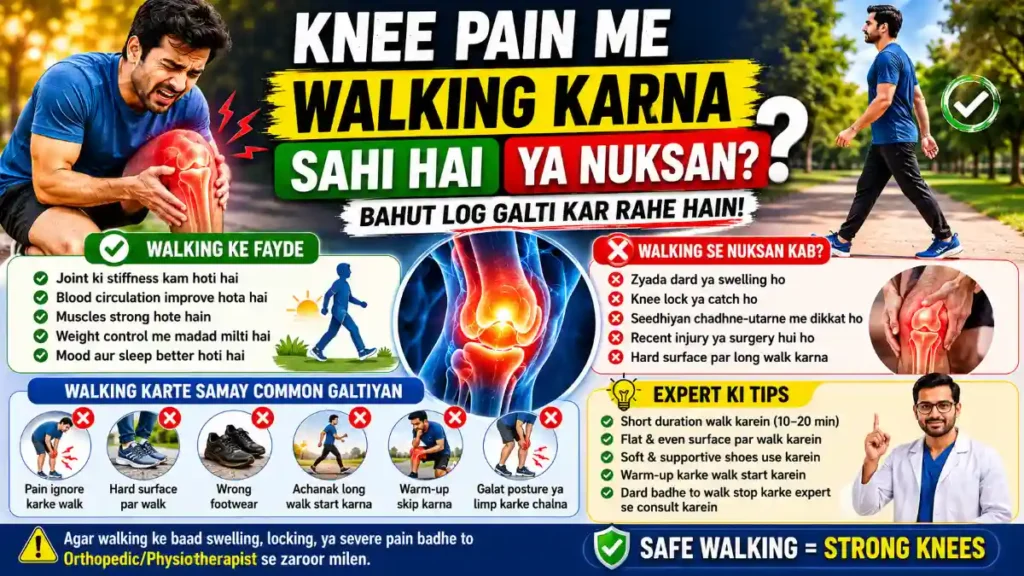
1. Pain Ignore Karke Excessive Walking
Agar walking ke baad swelling ya sharp pain badh raha hai, to forcefully walk continue karna damage increase kar sakta hai.
2. Hard Surface Par Walking
Concrete road ya hard tiles par long walks knees par extra pressure daal sakte hain.
3. Wrong Footwear
Flat ya worn-out shoes shock absorption kam kar dete hain, jiski wajah se knee stress badh sakta hai.
4. Sudden Long Walk Start Karna
Achanak 8–10k steps start karna weak knee muscles wale logon me pain flare-up kar sakta hai.
5. Warm-Up Skip Karna
Tight muscles aur stiff joints ke saath directly walking start karne se discomfort badh sakta hai.
6. Limp Karke Chalna
Galat walking posture ya body imbalance knees ke ek side par extra load daal sakta hai.
✅ Key Takeaways
Walking may help mild knee stiffness but excessive walking can worsen inflammation.
Ignoring persistent pain can affect mobility and daily life activities.
Weight management and muscle strengthening reduce stress on knee joints.
Proper footwear and posture correction play a major role in recovery.
Early physiotherapy assessment often prevents chronic joint problems.
Warning Signs — In Symptoms Ko Ignore Mat Kijiye
Har knee pain dangerous nahi hota, lekin kuch signs attention demand karte hain.
Agar walking ke baad knee lock hone lage, swelling aaye, clicking sound ho, ya stairs descend karte waqt sharp pain aaye, to evaluation zaroor karwana chahiye.
Morning stiffness jo 20–30 minute se zyada rahe, wo early joint degeneration ka signal ho sakta hai.
Agar pain gradually increase ho raha hai aur walking distance kam hoti ja rahi hai, to ye body ka warning sign hai.
Night pain, redness, fever ya sudden instability ko ignore nahi karna chahiye.
🚨 Don’t Ignore These Signs
Persistent swelling after walking
Sharp pain while climbing stairs
Knee locking or instability
Morning stiffness lasting more than 30 minutes
Pain increasing week by week
Diagnosis Kaise Kiya Jata Hai?
Knee pain ka correct diagnosis sirf X-ray se nahi hota.
Physiotherapy assessment me gait analysis, muscle imbalance, flexibility, walking mechanics aur joint loading patterns evaluate kiye jaate hain.
In my clinical experience, kai patients ka MRI normal hota hai lekin unki movement pattern faulty hoti hai, jo pain ka major reason ban jati hai.
Doctors physical examination ke saath imaging tests advise kar sakte hain:
X-ray osteoarthritis evaluate karne ke liye useful hota hai. MRI ligament, meniscus aur cartilage assessment me help karta hai.
Kabhi-kabhi blood tests inflammatory arthritis rule out karne ke liye bhi kiye jaate hain.
🩺 Real Patient Story
A 36-year-old office employee visited the clinic after experiencing knee pain during daily walking. Initially, he ignored the discomfort thinking it was normal weakness. Assessment revealed poor muscle strength, prolonged sitting habits, and incorrect walking mechanics. After physiotherapy rehabilitation and lifestyle correction, his symptoms improved significantly within weeks.
Treatment & Physiotherapy Management
Knee pain management ka goal sirf painkillers dena nahi hota. Real recovery movement correction aur muscle rehabilitation se aati hai.
Agar mild stiffness aur early degeneration hai, to controlled walking beneficial ho sakti hai. Lekin walking intensity gradually increase karni chahiye.
Physiotherapy me strengthening exercises especially quadriceps, gluteal muscles aur core activation bahut important role play karte hain.
Many patients improve faster when unko sirf rest nahi, balki correct exercise progression diya jata hai.
Weight reduction bhi critical factor hai. Research ke according even small weight loss knee joint pressure significantly reduce kar sakta hai.
Heat therapy, manual therapy, stretching aur gait correction bhi kaafi patients me helpful hote hain.
Ek common myth hai ki “knee pain me bilkul chalna bandh kar dena chahiye.” Reality me complete inactivity stiffness aur weakness badha sakti hai.
Lekin dusri taraf excessive walking bhi harmful ho sakti hai. Balance hi sabse important strategy hai.
Recovery timeline patient ke condition par depend karti hai. Mild cases few weeks me improve kar sakte hain, jabki chronic osteoarthritis patients ko long-term management ki zarurat pad sakti hai.
Physiotherapists Usually Recommend…
“Physiotherapists usually recommend short-duration, low-impact walking instead of complete bed rest, kyunki controlled movement joints ko flexible rakhne me madad karta hai.”
“Experts aksar advise karte hain ki knee pain me sudden long walks, running ya uneven surface par walking avoid karni chahiye.”
“Proper warm-up, supportive footwear aur gradual walking duration increase karna knee strain ko kam kar sakta hai.”
❌ Myth vs ✅ Fact
Myth: Knee pain means you should completely stop walking.
Fact: Controlled movement and guided rehabilitation are often better than prolonged inactivity.
Prevention Strategy
Long-term knee protection daily habits se hi possible hoti hai.
Hard concrete roads ki jagah softer tracks choose karna helpful ho sakta hai. Proper cushioned footwear important hai.
Agar aap office worker hain, to pura din sitting avoid kijiye. Har 40–50 minute me thoda movement kariye.
Indian households me floor sitting common hai. Agar already knee pain hai, to prolonged floor posture avoid karna beneficial ho sakta hai.
Strength training ko ignore mat kijiye. Sirf walking enough nahi hoti. Strong muscles joint ko support karte hain.
Hydration, healthy weight aur vitamin D maintenance bhi important role play karte hain.
When To See A Doctor
Agar knee swelling ho, instability ho, fever ke saath pain ho, ya walking difficult hoti ja rahi ho, to doctor ya physiotherapist consultation delay nahi karna chahiye.
Agar 2–3 weeks se pain persistent hai ya night pain ho raha hai, to proper evaluation important hai.
Who Should Avoid Certain Exercises Or Treatments?
Severe ligament injury, acute swelling, fractures, uncontrolled arthritis flare aur post-surgical patients ko bina expert guidance aggressive walking ya high-impact exercises avoid karne chahiye.
Kuch patients ko deep squats aur stair overload temporarily avoid karna pad sakta hai.
Personally, I’ve observed ki internet videos dekhkar random exercises karna kai baar condition worsen kar deta hai.
⏳ Recovery Timeline
Mild knee pain cases may improve within a few weeks with physiotherapy and lifestyle correction.
Chronic or arthritis-related knee problems often require long-term strengthening and weight management.
Consistency in rehabilitation exercises usually matters more than temporary pain relief methods.
FAQs
Q1. Kya knee pain me daily walking karni chahiye?
Mild stiffness aur early arthritis me controlled walking beneficial ho sakti hai, lekin severe pain me excessive walking harmful ho sakti hai.
Q2. Walking ke baad knee pain badh jaye to kya karein?
Walking intensity reduce karein, rest lein aur physiotherapist se assessment karwayein.
Q3. Knee pain me stairs avoid karna chahiye?
Agar stairs se sharp pain hota hai to temporary reduction helpful ho sakta hai.
Q4. Kya obesity se walking ke time knee pain badhta hai?
Haan, extra body weight knee joint par pressure increase karta hai.
Q5. Kya treadmill walking safe hoti hai?
Controlled speed aur proper posture ke saath treadmill useful ho sakti hai, lekin har patient ke liye suitable nahi hoti.
Q6. Knee pain me best exercise kya hai?
Quadriceps strengthening, stretching aur low-impact rehabilitation exercises commonly beneficial hote hain.
References
- World Health Organization. Physical Activity Guidelines.
https://www.who.int/news-room/fact-sheets/detail/physical-activity - National Institutes of Health (NIH). Osteoarthritis Overview.
https://www.niams.nih.gov/health-topics/osteoarthritis - PubMed. Exercise Therapy for Knee Osteoarthritis.
https://pubmed.ncbi.nlm.nih.gov/31034367/

Dr. Shabbir Hussain, BPT
Licensed Physiotherapist | Clinical Rehabilitation Specialist
Maharashtra OTPT Council Reg. No.: PR-2021/08/PT/009532
Society of Onco Physiotherapists Reg. No.: SOP/00033/LM
Dr. Shabbir Hussain, BPT, Registered Physiotherapist with over 8 years of experience in physiotherapy, kidney rehabilitation, oncological rehabilitation, and lymphedema management. He specializes in balance disorders, pain management, musculoskeletal rehabilitation, strengthening programs, and VR-based rehabilitation.