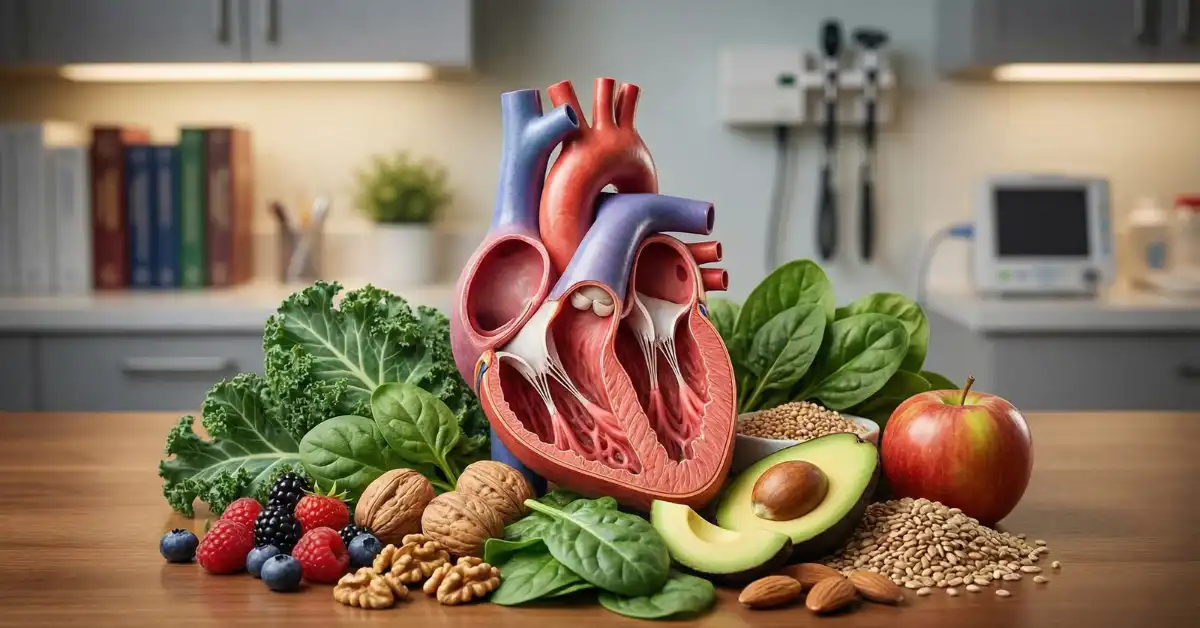
Heart-Healthy Diet – Heart disease rarely begins with chest pain.
It often starts quietly — on your plate.
Many people believe they are “eating healthy” while unknowingly following diets overloaded with refined carbs, hidden sodium, trans fats, and ultra-processed foods. This misconception is dangerous. Cardiologists worldwide warn that diet is one of the strongest, most modifiable risk factors for heart disease — yet also the most misunderstood.
Ignoring proper dietary guidelines doesn’t just raise cholesterol. It accelerates silent inflammation, arterial damage, insulin resistance, and hypertension, often years before symptoms appear. By the time warning signs show up, the damage may already be advanced.
In my clinical physiotherapy practice, many patients recovering from heart surgery or living with hypertension are surprised to learn that small dietary changes often improve blood pressure, stamina, and cholesterol over time. While exercise is important, nutrition remains the foundation of long-term cardiovascular health.
What Is a Healthy Diet for the Heart?
A heart-healthy diet is an evidence-based eating pattern designed to:
- Reduce cardiovascular risk
- Control blood pressure and cholesterol
- Improve vascular health
- Prevent heart attacks and strokes
According to the World Health Organization and the National Institutes of Health, a heart-protective diet prioritizes:
- Whole, minimally processed foods
- Healthy fats (unsaturated fats)
- High dietary fiber
- Controlled sodium and added sugars
This is not a “temporary diet.” It is a lifelong cardioprotective strategy supported by decades of clinical research.
The NEGATIVE ANGLE ⚠️ What Happens If You Ignore It?
Ignoring heart-healthy dietary guidelines has measurable, real-world consequences:
🚨 Long-Term Complications
- Atherosclerosis (artery blockage)
- Hypertension
- Type 2 diabetes
- Heart attack (myocardial infarction)
- Stroke
- Heart failure
📊 The Data Is Alarming
- Cardiovascular disease causes ~18 million deaths annually worldwide (WHO).
- Poor diet is responsible for over 30% of preventable heart disease deaths.
- High sodium intake alone is linked to millions of hypertension-related deaths each year.
A landmark review in PubMed-indexed journals shows that dietary patterns high in refined carbohydrates and saturated fats directly accelerate plaque formation and endothelial dysfunction — often without early symptoms.
Causes & Risk Factors Related to Diet
Lifestyle-Related
- High intake of fried and ultra-processed foods
- Excess sugar-sweetened beverages
- Low fruit, vegetable, and fiber intake
Medical Factors
- Dyslipidemia (high LDL, low HDL)
- Insulin resistance
- Obesity and metabolic syndrome
Age-Related
- Reduced metabolic flexibility
- Increased arterial stiffness
Occupational & Social
- Sedentary work
- Irregular meals
- Chronic stress eating
Warning Signs & Symptoms ⚠️ Don’t Ignore These
Early (Often Missed)
- Persistent fatigue
- Mild breathlessness
- Elevated BP or cholesterol on routine tests
Advanced
- Chest pain or tightness
- Palpitations
- Swelling in legs
- Reduced exercise tolerance
⚠️ Important: Many people with advanced coronary artery disease remain asymptomatic until a major event occurs.
Diagnosis & Clinical Standards
Cardiology-aligned assessment includes:
- Lipid profile (LDL, HDL, triglycerides)
- Blood pressure monitoring
- Fasting glucose / HbA1c
- High-sensitivity CRP
- ECG, stress testing (if indicated)
WHO and NIH guidelines emphasize early dietary intervention even before abnormal test results appear, especially in high-risk individuals.
STRONG SOLUTION 💪 The Proven Heart-Healthy Diet
🥗 Core Components (Evidence-Based)
- Vegetables & fruits: ≥5 servings/day
- Whole grains: Oats, brown rice, millets
- Healthy fats: Nuts, seeds, olive/mustard oil
- Lean protein: Fish, legumes, low-fat dairy
- Low sodium: <5 g salt/day (WHO recommendation)
❌ What to Strictly Limit
- Trans fats
- Processed meats
- Sugary drinks
- Excess refined carbohydrates
🧠 Myth vs Fact
Myth: “Low-fat diets are best for the heart.”
Fact: Quality of fat matters more than quantity.
Prevention & Daily Habits (WHO-Aligned)
- Plan meals, don’t eat impulsively
- Read food labels carefully
- Combine diet with regular physical activity
- Manage stress and sleep
- Regular cardiovascular screening after age 30 (earlier if high-risk)
Preventive nutrition is one of the most powerful, low-cost, life-saving medical interventions available today.
Final Thoughts
Every meal is an opportunity to protect your heart. You don’t need a perfect diet overnight. Replacing sugary drinks, reducing processed foods, and eating more fruits, vegetables, and whole grains can significantly lower your long-term risk of heart disease. Small daily choices today may prevent a life-threatening emergency tomorrow.
FAQs (SEO + Discover Friendly)
Q1. Is heart damage from poor diet reversible?
Early-stage changes can improve significantly with dietary correction and lifestyle changes.
Q2. How long does it take to see benefits?
Blood pressure and lipid improvements often appear within 4–8 weeks.
Q3. Can physiotherapy support heart health?
Yes. Cardiac rehabilitation and guided exercise improve outcomes when combined with diet.
Q4. Are Indian diets compatible with heart-healthy eating?
Absolutely — traditional diets rich in legumes, vegetables, and whole grains are cardioprotective when prepared correctly.
Q5. What is the biggest dietary mistake people make?
Believing “home-cooked” automatically means heart-healthy.
5️⃣ REFERENCES
World Health Organization. (2023). Cardiovascular diseases (CVDs). https://www.who.int
National Institutes of Health. (2022). Dietary guidelines for cardiovascular health. https://www.nih.gov
Mozaffarian, D., et al. (2016). Role of diet in cardiovascular disease. Journal of the American College of Cardiology. https://pubmed.ncbi.nlm.nih.gov
Estruch, R., et al. (2018). Primary prevention of cardiovascular disease with a Mediterranean diet. NEJM. https://pubmed.ncbi.nlm.nih.gov
⚠️ Medical Disclaimer
The information provided on this website is intended for educational and informational purposes only. It is not a substitute for professional medical advice, diagnosis, or treatment.
Always seek the advice of a qualified physician, cardiologist, physiotherapist, or other licensed healthcare provider with any questions you may have regarding a medical condition, diet, exercise program, or treatment plan.
Never disregard professional medical advice or delay seeking it because of something you have read on this website. If you believe you may be experiencing a medical emergency, contact your local emergency services immediately.
While every effort is made to ensure accuracy and alignment with current medical guidelines (including WHO, NIH, and peer-reviewed research), medical knowledge evolves continuously. The publisher and authors make no guarantees regarding completeness or applicability to individual cases.

Dr. Shabbir Hussain, BPT Licensed Physiotherapist | Clinical Rehabilitation SpecialistMaharashtra OTPT Council Reg. No. PR-2021/08/PT/009532Society of Onco Physiotherapists Reg. No. SOP/00033/LM
He is a licensed physiotherapist with over 8 years of experience in physiotherapy, kidney rehabilitation, oncological rehabilitation, and lymphedema management. He specializes in balance disorders, pain management, musculoskeletal rehabilitation, strengthening programs, and VR-based rehabilitation.
Dr. Shabbir Hussain (BPT)