
Published Date: May 31, 2026 at 10:30 PM IST
Last Updated: June 01, 2026
👨⚕️ Medical Review & Trust Information
Written & Reviewed By: Dr. SHABBIR HUSSAIN (BPT)
Experience: Rehabilitation, Musculoskeletal Physiotherapy & Public Health Education
Last Updated: June 01, 2026
“This article has been reviewed by a qualified physiotherapist for medical accuracy and public health awareness.”
Evidence-based review using WHO, NIH, PubMed, rehabilitation research, and physiotherapy clinical guidelines.
In 2026, extreme heat is becoming more than just an uncomfortable summer problem. Scientists say El Niño is intensifying temperatures across many regions, increasing the risk of dehydration, heat stroke, heart stress, and other serious health complications.
An office employee feels exhausted for days but assumes it’s “just summer fatigue.” Clinically, these situations are becoming far more common during El Niño-driven heatwaves.
This is no longer normal seasonal discomfort.
⚡ Quick Summary
Main Risk: Extreme heat can silently trigger dehydration, heat exhaustion, heat stroke, muscle fatigue, and cardiovascular stress.
Key Symptom: Persistent dizziness, headache, heavy sweating, muscle cramps, unusual weakness, or confusion.
Best Solution: Early hydration, electrolyte balance, cooling strategies, rest, and timely medical attention.
Prevention Tip: Avoid outdoor activity during peak afternoon heat and never ignore early warning signs.
In my physiotherapy practice and rehabilitation settings, many patients now report unusual fatigue, muscle cramps, dizziness, poor concentration, sleep disturbance, and body pain during extreme heat periods.
What most people ignore is that prolonged exposure to excessive heat doesn’t only affect comfort — it places stress on the brain, heart, muscles, kidneys, and nervous system.
And in India’s crowded urban lifestyle, the risks become even greater.
What Is El Niño Heatwave?
El Niño is a climate phenomenon linked to warming of surface ocean temperatures in the Pacific Ocean.
Although it begins far from India, its effects can disrupt weather patterns globally, often leading to unusually high temperatures, intense heatwaves, drought-like conditions, and prolonged hot weather.
According to global health agencies including the WHO and climate researchers, rising temperatures associated with El Niño events are increasing heat-related illnesses across many countries.
But medically, the bigger concern is how the human body reacts.
The body normally regulates temperature through sweating and blood circulation. During extreme heat exposure, this system becomes overloaded. The heart works harder, fluid loss increases rapidly, electrolyte balance gets disturbed, and internal organs start experiencing physiological stress.
In simple words, the body begins fighting to survive the heat.
One common pattern observed in rehabilitation clinics is that patients with pre-existing conditions — especially elderly individuals, diabetics, heart patients, outdoor workers, and physically inactive adults — struggle much more during heatwaves.
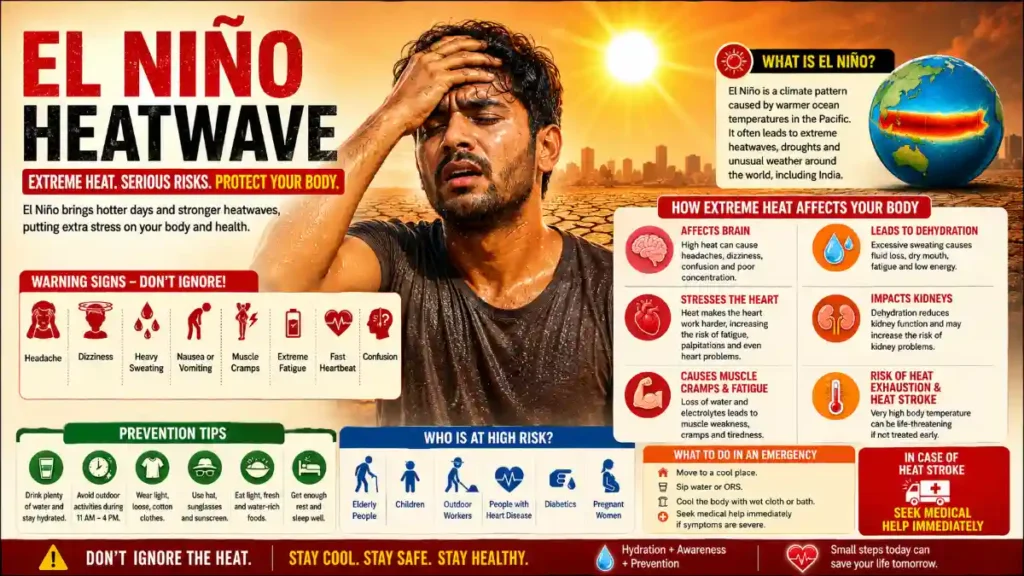
The 7 Hidden Dangers Most People Don’t Notice
Many Indians believe heat-related illness only means fainting in the sun. In reality, the damage can begin much earlier.
Persistent dehydration affects muscle function, joint lubrication, concentration, and circulation. Personally, I’ve observed many patients complain of increased muscle tightness, neck pain, headaches, and severe fatigue during peak summer months.
Extreme heat can also worsen anxiety, sleep quality, and physical recovery.
For physiotherapy patients recovering from injuries, dehydration reduces tissue healing efficiency. Muscle cramps become more frequent. Balance issues increase in elderly patients. Even walking tolerance can reduce significantly.
Long-term heat stress may increase the risk of:
- Heat exhaustion
- Heat stroke
- Kidney stress
- Cardiovascular strain
- Severe dehydration
- Electrolyte imbalance
- Fatigue-related accidents
Heat stroke remains the most dangerous complication because it can become life-threatening within minutes if body temperature rises uncontrollably.
Why Modern Indian Lifestyle Makes It Worse
The modern urban lifestyle has quietly increased vulnerability to extreme heat.
Many office workers spend hours indoors in air-conditioned environments and suddenly step into harsh outdoor heat during commuting. This abrupt temperature transition stresses the body significantly.
Students remain glued to smartphones late at night, reducing sleep quality and recovery capacity. Sedentary routines weaken overall cardiovascular fitness, making heat tolerance poorer.
In real rehabilitation settings, another common pattern observed is inadequate hydration. Many people drink water only after feeling thirsty — but by then, dehydration may already have started.
Outdoor workers, traffic police, delivery staff, construction laborers, nurses, gym-goers, and athletes face even higher risk because prolonged exposure combined with physical exertion accelerates heat stress rapidly.
Alcohol consumption, high caffeine intake, obesity, poor sleep, and certain medications may further worsen heat intolerance.
👨⚕️ Doctor Insight
⚠️ Many patients ignore early dehydration symptoms until simple daily activities like walking, concentrating, or climbing stairs suddenly become exhausting.
In physiotherapy practice, one common pattern observed during severe heatwaves is increased fatigue, muscle tightness, headaches, poor sleep, and reduced physical endurance.
Early hydration, recovery-focused routines, and avoiding prolonged afternoon heat exposure can significantly reduce complications.
Don’t Ignore These Warning Signs
The body often gives early warning signals before a serious heat emergency occurs.
Initially, symptoms may appear mild:
- Excessive sweating
- Headache
- Muscle cramps
- Dry mouth
- Fatigue
- Irritability
- Dizziness
- Increased heart rate
But advanced symptoms can become dangerous quickly.
If someone develops confusion, vomiting, difficulty walking, fainting, severe weakness, or stops sweating despite extreme heat exposure, immediate medical attention is essential.
Clinically, many patients ignore these early symptoms because they assume it’s temporary weakness or “garmi lag gayi hai.” Unfortunately, delayed action increases risk dramatically.
⚕️ Medical Disclaimer
This article is intended only for educational and public health awareness purposes. It should not be considered a substitute for professional medical diagnosis, emergency care, or personalized treatment advice.
If you experience severe symptoms such as confusion, fainting, chest pain, breathing difficulty, or signs of heat stroke, seek immediate medical attention.
Always consult a qualified doctor or physiotherapist before starting any exercise, rehabilitation, or treatment program.
How Doctors Diagnose Heat-Related Illness
Diagnosis usually begins with clinical evaluation.
Doctors assess body temperature, hydration status, blood pressure, pulse rate, mental status, and neurological symptoms. In physiotherapy assessments, therapists may also evaluate muscle fatigue, exercise tolerance, balance, breathing pattern, and physical endurance.
If severe symptoms are present, investigations may include:
- Blood tests
- Electrolyte analysis
- Kidney function tests
- ECG monitoring
- Urine examination
Heat stroke diagnosis becomes critical when body temperature rises significantly along with altered mental status.
Early diagnosis dramatically improves recovery outcomes.
Treatment and Physiotherapy Management
Treatment depends on severity.
Mild heat-related fatigue often improves with hydration, electrolyte replacement, cooling, and rest. However, moderate to severe heat illness may require hospital care, IV fluids, and emergency cooling measures.
Physiotherapy also plays an important role during recovery.
In clinical rehabilitation practice, gradual reconditioning helps patients regain endurance safely after heat exhaustion. Many individuals experience prolonged weakness, reduced exercise tolerance, muscle tightness, and fatigue even after initial recovery.
Treatment approaches may include:
- Controlled breathing exercises
- Gentle mobility training
- Progressive strengthening
- Postural correction
- Hydration education
- Heat adaptation strategies
- Sleep optimization
- Recovery pacing
Many patients improve faster when they avoid immediately returning to intense activity after heat illness.
One dangerous myth is that “more sweating means better heat tolerance.” In reality, excessive sweating without adequate fluid replacement may worsen dehydration rapidly.
Recovery timelines vary. Mild cases may recover within days, while severe heat-related complications can take weeks.
A Real Patient Story
A 34-year-old IT employee visited the clinic during peak summer after experiencing continuous headaches, neck tightness, fatigue, and poor concentration for almost two weeks.
Initially, he assumed it was work stress.
However, detailed assessment revealed severe dehydration patterns, irregular sleep, excessive caffeine intake, minimal water consumption, and prolonged commuting in afternoon heat.
After hydration correction, posture rehabilitation, sleep improvement, reduced heat exposure, and gradual physical conditioning, his symptoms improved significantly within three weeks.
This pattern is becoming increasingly common in urban Indian professionals.
📌 Key Takeaways
Prevention Strategies That Actually Work
The most effective heat protection strategy is consistency.
The body handles heat better when hydration, sleep, physical activity, and recovery are maintained regularly — not only during emergencies.
In my clinical experience, people who stay physically active throughout the year often tolerate heat stress better compared to sedentary individuals.
Simple preventive measures matter enormously:
Drink fluids regularly even before thirst develops. Avoid intense outdoor activity between late morning and afternoon peak heat. Wear lightweight breathable clothing. Maintain electrolyte balance during heavy sweating.
Indian households should also avoid overcrowded poorly ventilated sleeping environments during heatwaves whenever possible.
Students preparing for exams, office workers using laptops for long hours, and gamers staying awake late at night may unknowingly worsen dehydration and heat stress.
Another overlooked prevention strategy is maintaining proper nutrition. Excessively oily, spicy, and dehydrating food habits during extreme heat can worsen fatigue and digestive discomfort.
When Should You See a Doctor?
Seek immediate medical care if symptoms include:
- Confusion
- Chest pain
- Difficulty breathing
- Persistent vomiting
- Fainting
- High fever
- Severe weakness
- Altered consciousness
Even milder symptoms deserve attention if they persist for several days.
Elderly individuals, children, pregnant women, heart patients, diabetics, kidney patients, and outdoor workers should never ignore prolonged heat-related symptoms.
Who Should Avoid Certain Exercises or Treatments?
Not everyone should continue intense exercise during extreme heat conditions.
People recovering from recent illness, heart disease, uncontrolled diabetes, severe hypertension, kidney disorders, or previous heat stroke require medical guidance before engaging in strenuous activity during heatwaves.
High-intensity gym workouts during peak afternoon temperatures may increase risk significantly.
In physiotherapy rehabilitation, exercise intensity often needs temporary modification during severe heat periods to prevent overexertion and dehydration-related complications.
Final Thoughts
El Niño heatwaves are changing the way the human body responds to summer.
What once felt manageable is now becoming physically dangerous for many people — especially in crowded cities, high-stress jobs, and sedentary lifestyles.
The biggest mistake is waiting until symptoms become severe.
Clinically, early recognition, proper hydration, recovery-focused routines, and heat-smart lifestyle adjustments can dramatically reduce risk. Extreme heat should never be treated casually anymore.
Your body usually warns you before it collapses. The problem is that most people are too busy to listen.
Frequently Asked Questions (FAQs)
What is El Niño?
El Niño is a natural climate pattern that occurs when ocean temperatures in the Pacific Ocean become warmer than normal. This change can affect weather patterns worldwide, leading to hotter temperatures, droughts, heavy rainfall, and stronger heatwaves in many regions.
How does El Niño affect human health?
El Niño can increase the risk of dehydration, heat exhaustion, heat stroke, breathing problems, and worsening heart conditions due to rising temperatures and extreme heat exposure. Vulnerable groups such as children, older adults, and people with chronic illnesses are at higher risk.
Why are heatwaves becoming stronger?
Heatwaves are becoming more intense because of a combination of climate change and weather events like El Niño. Rising global temperatures trap more heat in the atmosphere, making extreme hot weather last longer and occur more frequently.
Can heatwaves cause heart problems?
Yes. Extreme heat can put extra stress on the heart by causing dehydration, increasing heart rate, and lowering blood pressure. People with existing heart disease, high blood pressure, or diabetes may face a higher risk of complications during severe heatwaves.
How can I protect myself during extreme heat?
You can reduce heat-related health risks by staying hydrated, avoiding direct sunlight during peak afternoon hours, wearing lightweight clothing, using fans or air conditioning, and taking frequent breaks if working outdoors. Seek medical help immediately if symptoms like dizziness, confusion, chest pain, or fainting occur.
Can physiotherapy help after heat-related illness?
Yes. Physiotherapy rehabilitation may help improve endurance, breathing efficiency, posture, fatigue recovery, and gradual return to physical activity.
Who is at highest risk during heatwaves?
Elderly individuals, children, pregnant women, outdoor workers, heart patients, diabetics, and sedentary adults are generally at higher risk.
References
- World Health Organization. (2025). Heat and Health. https://www.who.int/news-room/fact-sheets/detail/climate-change-heat-and-health
- National Institutes of Health. Heat Stroke Overview. https://www.ncbi.nlm.nih.gov/books/NBK537135/
- Centers for Disease Control and Prevention. Warning Signs and Symptoms of Heat-Related Illness. https://www.cdc.gov/disasters/extremeheat/warning.html
- PubMed Central. Climate Change and Heat-Related Illness. https://www.ncbi.nlm.nih.gov/pmc/articles/PMC8677607/

Dr. Shabbir Hussain, BPT
Registered Physiotherapist | Clinical Rehabilitation Specialist
Maharashtra OTPT Council Reg. No.: PR-2021/08/PT/009532
Society of Onco Physiotherapists Reg. No.: SOP/00033/LM
Dr. Shabbir Hussain, BPT, Registered Physiotherapist with over 8 years of experience in physiotherapy, kidney rehabilitation, oncological rehabilitation, and lymphedema management. He specializes in balance disorders, pain management, musculoskeletal rehabilitation, strengthening programs, and VR-based rehabilitation.